
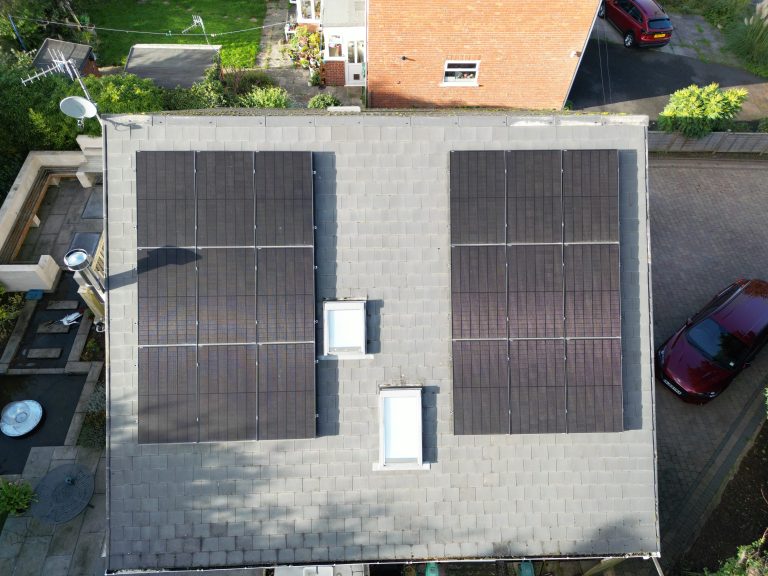
Solar panels generate clean electricity from sunlight, making solar one of the most practical and widely adopted renewable energy sources available to UK homeowners and businesses today. The financial case is strong, the environmental benefits are real, and the technology has matured considerably over the past decade. That said, solar is not the right fit for every property or situation, and a clear-eyed look at both sides helps you make a better decision.
This guide covers the main advantages of solar energy, the limitations worth knowing about, and the factors that determine whether it makes sense for your home or business.
What Are the Advantages of Solar Energy?
Overview of Solar Power Benefits
Solar energy is a renewable, sustainable energy source derived from sunlight. Unlike fossil fuels, it does not deplete over time, does not produce harmful emissions during generation, and is available in some quantity every day across the UK, even when skies are overcast.
Solar panels generate clean electricity through a process called the photovoltaic effect. When sunlight hits the panel’s cells, it excites electrons and creates a flow of direct current (DC) electricity. An inverter converts that into alternating current (AC), which is the form your home’s appliances and sockets use.
The benefits span several categories: financial savings, environmental impact, energy independence, and property value. Each carries different weight depending on your priorities, but most homeowners find the combination compelling enough to justify the investment.
Why Solar Energy Is Growing in Popularity
Solar power supports sustainability goals at both an individual and national level, which is one reason adoption has accelerated sharply over the past ten years. The UK now has over one million solar installations on domestic properties, and that number continues to rise.
Several factors are driving that growth. Electricity prices have risen significantly, which makes generating your own power more valuable than it used to be. Panel costs have fallen, improving the return on investment. Government schemes like the Smart Export Guarantee have given solar owners a route to earn from surplus electricity. And awareness of carbon emissions has pushed more homeowners and businesses to look at practical ways to reduce their environmental footprint.
Environmental advocates, energy consultants, and government bodies all point to solar as one of the most accessible and scalable routes to cleaner energy at a household level.
Financial Advantages of Solar Energy
Reducing Energy Bills
Solar energy reduces electricity bills by supplying power generated on your own roof rather than drawing everything from the grid. Every unit of electricity your panels produce and you consume directly is a unit you do not pay your energy supplier for.
With UK electricity prices sitting around 24p to 28p per unit, a 4kW system generating roughly 3,400 kWh per year can offset a meaningful portion of an average household’s annual electricity consumption. Depending on how much of that generation you use directly, annual savings typically fall between £500 and £950 for a standard domestic installation, however pairing a battery solution with a standard system can significantly boost savings.
The more electricity you consume during daylight hours, the greater the immediate saving. If your household is at home during the day, runs appliances like dishwashers and washing machines while the sun is up, or charges an electric vehicle during daylight, the proportion of your own generation you consume rises significantly, and so do the savings.
Adding battery storage extends that benefit into the evening by storing surplus electricity generated during the day for use after dark.
Long-Term Savings and ROI
The financial case for solar is built on the long game. The installation cost is a one-off upfront investment, and the savings it generates accumulate every year for the life of the system.
A typical domestic solar installation pays for itself within seven to eleven years. After that point, the system continues generating savings for another fifteen to twenty years with minimal maintenance. Over a full system lifetime of 25 to 30 years, the return on investment routinely reaches two to three times the original cost, and that figure improves further as electricity prices rise.
Here is a simplified illustration:
| Detail | Figure |
| System cost | £7,500 |
| Annual savings | £850 |
| Payback period | ~9 years |
| Remaining system life after payback | 16 to 20+ years |
| Estimated lifetime savings | £15,000 to £20,000+ |
Cost savings, installation cost, and payback period all vary by property, system size, and self-consumption rate. The figures above are representative rather than guaranteed, but they reflect what most UK homeowners with a properly sized system can expect over time.
It should also be added that while solar-only installations are still common, more homeowners now opt for a combined solar and battery storage system. Adding battery storage allows more of the electricity generated to be used within the home, increasing flexibility, improving energy independence, and typically delivering even stronger long-term value. You can read more about a typical battery solution, the Tesla Powerwall 3.
Environmental Benefits of Solar Power
Lower Carbon Emissions
Renewable energy lowers carbon emissions by replacing electricity that would otherwise be generated from fossil fuels. Every kilowatt-hour of solar electricity your panels produce is a kilowatt-hour that does not need to come from a gas-fired power station.
A typical 4kW domestic solar system in the UK saves approximately 1.3 to 1.6 tonnes of carbon dioxide per year compared to grid electricity. Over a 25-year system lifetime, that represents a carbon saving in the region of 35 tonnes per installation.
Solar panels themselves have a carbon cost from manufacturing, but that embodied carbon is paid back within two to four years of operation. From that point forward, the electricity generated is genuinely low-carbon for the remaining life of the system.
For households and businesses serious about reducing their environmental impact, solar is one of the few clean energy measures that delivers both a financial return and a meaningful carbon reduction simultaneously.
Sustainable and Renewable Energy Source
Solar power supports sustainability goals because its fuel source, sunlight, is inexhaustible and freely available. Unlike coal, gas, or oil, the sun does not run out, does not need to be extracted, and does not carry geopolitical risk or price volatility.
The environmental impact of solar extends beyond carbon. Generating electricity from sunlight produces no air pollution, no water consumption during operation, and no noise. For households wanting to reduce their ecological footprint in a practical and lasting way, solar is one of the most straightforward routes available.
From a long-term sustainability standpoint, solar panels also require relatively little maintenance once installed. There are no moving parts, no combustion, and no consumables. The main components, the panels themselves, carry performance warranties of 25 years as standard from reputable manufacturers, but can be expected to last even longer
Energy Independence and Efficiency
Reducing Reliance on the Grid
Systems provide energy independence by shifting a portion of your electricity supply away from the national grid and onto your own roof. You are no longer entirely dependent on energy suppliers, wholesale market prices, or the stability of supply infrastructure for every unit of electricity your home uses.
That independence has practical value. When electricity prices rise, as they have done repeatedly in recent years, homes with solar panels absorb less of that increase because a proportion of their electricity comes from their own generation. The larger your system and the more you self-consume, the more insulated you are from price movements.
Full grid independence is not realistic for most UK homes with solar panels alone, because output varies with weather and season and demand does not always align with generation. But meaningful partial independence is achievable, and when combined with battery storage, the degree of self-sufficiency increases considerably.
Improved Efficiency with Battery Storage
Battery storage increases energy usage efficiency by capturing electricity generated during the day that would otherwise go unused or be exported to the grid at a low rate.
Without a battery, surplus solar electricity is automatically exported. You receive a small payment for it through the Smart Export Guarantee, but that rate is far lower than the cost of buying electricity from the grid. With a battery, that surplus is stored and used in your home later, at a value equal to the full grid electricity rate you avoid paying.
A 5kWh to 10kWh battery typically increases self-consumption from around 30 to 50 percent without storage to 70 to 90 percent with storage. Battery capacity, efficiency, and energy output all factor into how much additional value storage adds for a given household.
The result is a system that works harder for you throughout the day and into the evening, rather than one that is only effective during daylight hours.
Additional Benefits of Solar Panels
Increasing Property Value
Solar installations add property value in a way that few other home improvements can match, because they deliver an ongoing financial benefit to whoever owns the property rather than simply improving its appearance or layout.
Research from the UK property market consistently shows that homes with solar panels sell faster and at a premium compared to equivalent properties without them. Buyers are increasingly aware of energy costs, and a property with an existing solar system represents a ready-made saving from day one of ownership.
For homeowners planning to sell in the medium or long term, solar panels serve a dual purpose: they cut your bills while you live there, and they add to the sale value when you leave. For investors and landlords, improved EPC ratings from solar installations also support compliance with evolving energy efficiency legislation.
Scalability and Flexibility
Solar systems are scalable and can be sized to match almost any property or energy requirement. A small 3kW system suits a compact home with modest electricity usage. A 10kW or larger system is appropriate for a bigger property, a household with an electric vehicle, or a business premises with higher daytime demand.
Systems can also be expanded after installation in many cases. If your energy usage increases, for example after adding an EV charger or a home office, additional panels can be incorporated if roof space and inverter capacity allow.
For businesses, scalability is particularly relevant. A commercial solar installation can be designed around current energy usage with capacity built in for growth, making it a reliable and efficient long-term infrastructure decision rather than a fixed point-in-time purchase.
Disadvantages of Solar Energy to Consider
Upfront Costs and Installation
The main barrier to solar adoption for most households and businesses is the upfront cost. A standard domestic installation costs between £5,000 and £13,000 depending on system size and complexity, and that figure needs to be available or financed before any savings begin.
For some buyers, that initial outlay is straightforward to justify given the long-term return. For others, particularly those on tighter budgets or planning to move within a few years, the payback period makes the case less compelling.
The installation cost is influenced by system size, roof complexity, equipment quality, and the installer you choose. Getting multiple quotes from certified installers and comparing on a like-for-like basis helps ensure you are paying a fair price for the right system.
Finance options are widely available, including 0% interest plans from some installers and green finance products from specialist lenders. Spreading the cost reduces the immediate barrier, though it is worth calculating total repayment against projected savings before committing to any finance arrangement.
Weather and Efficiency Limitations
Solar panels generate electricity from daylight, not just direct sunshine, but output is affected by weather and season in ways that matter for realistic planning.
In summer, a south-facing UK installation produces significantly more electricity than in winter. December and January are the lowest output months, while June and July are the highest. A system that covers most of your electricity needs in summer may cover considerably less in winter, which is worth factoring into your expectations.
Efficiency is also affected by shading. Panels partially shaded by a chimney, neighbouring building, or tree during part of the day will produce less electricity than unshaded panels. A well-designed system accounts for this, and in some cases micro-inverters or DC optimisers are used to minimise the impact of shading on overall output.
These are not reasons to avoid solar. They are simply realities to plan around when choosing system size and managing expectations about performance throughout the year.
Is Solar Energy Worth It?
Key Factors to Consider
Solar energy reduces electricity bills and systems provide energy independence, but whether the investment is right for a given property depends on several variables working together.
The strongest case for solar exists when:
● Your roof faces south, south-east, or south-west with minimal shading
● Your annual electricity bill is above average, giving more room for savings
● You plan to stay in the property long enough to clear the payback period
● You have daytime electricity usage, or are willing to add battery storage
● You value carbon reduction alongside the financial return
The case weakens when the roof is north-facing, heavily shaded, or structurally unsuitable, when you plan to move within a few years, or when the available system size is too small to generate meaningful savings relative to the installation cost.
Energy consultants and experienced installers can model projected savings based on your specific property, consumption, and usage patterns. That projection is worth getting before making a decision.
Who Benefits Most from Solar Energy?
Solar installations add property value and reduce running costs across a wide range of property types, but some situations benefit more than others.
Homeowners with suitable roofs and a long-term view of their property get the clearest financial return. The combination of bill savings, export earnings, and property value improvement makes solar one of the most financially sound home investments available.
Business owners with commercial premises and significant daytime electricity usage often see faster payback than residential customers, because more of the electricity generated is consumed directly rather than exported.
Landlords benefit from improved EPC ratings, growing tenant demand for energy-efficient properties, and the legislative direction of travel on minimum energy efficiency standards.
Investors in property who are thinking about long-term asset value will find that solar is increasingly a factor in buyer decision-making, particularly as energy costs remain a prominent concern for households across the UK.
If you want to know whether solar makes sense for your specific property and circumstances, Stratford Energy Solutions offers a detailed consultation and system design built around your actual energy usage, roof, and goals. We have completed over 3,000 installations and back every system with long warranties and ongoing monitoring support.