Energy prices are rising again: What October 2026 means for your home
Energy prices are rising again: What October 2026 means for your home Energy bills are rising again this October. But…

Yes, solar panels usually increase home value in the UK. Independent research puts the uplift at roughly 6.1% to 7.1% — around £14,000 to £16,000 on an average home — with wider industry estimates spanning about 1% to 14%. The exact figure depends on who owns the system, its size and age, the EPC improvement, and local buyer demand.
Solar panels affect property value because they change a home’s running costs, its EPC rating, and its appeal to the kind of buyer who now checks energy bills before making an offer. Those three things feed directly into what someone will pay.
Electricity has stayed expensive. Under the Ofgem energy price cap for 1 July to 30 September 2026, a typical household pays about 26.11p per kWh for electricity (national average, direct debit). Every unit a solar system generates is a unit the next owner does not have to buy, so the panels arrive with a built-in monthly saving already attached.
Regulation pushes in the same direction. Under the government’s Warm Homes Plan (published January 2026), all privately rented homes in England and Wales must reach EPC band C by 1 October 2030, up from the current minimum of band E, subject to a £10,000 cost cap per property. A home that already performs well on paper is worth more to a landlord or a forward-looking buyer than one that will need work.
Buyer demand has caught up too. Solar is now the most sought-after low-carbon feature among people buying newly built homes: E.ON research published in 2026 found 75% would be more likely to buy a new-build fitted with solar than one without. So the value question is no longer whether buyers notice solar; it is how much the right system, well documented, is worth to them.
The strongest UK evidence comes from a 2024 study by Swansea University and the University of Birmingham, published in the journal Energy Economics. It found that homes with solar panels sold for a premium above 6%, in a range of 6.1% to 7.1%.
The researchers, Asproudis, Gedikli, Talavera and Yilmaz, applied causal machine-learning methods to about five million Zoopla property observations, matched against the Land Registry’s official transaction prices. Applied to an average UK home, a premium of that size works out at roughly £14,000 to £16,000. The study is peer-reviewed and open access, so buyers, surveyors and sceptical relatives can all read it for themselves. Read the full paper.
Two honest caveats belong next to that number. First, it is an average across a large dataset, not a promise for any single house. Second, other UK analysis is more cautious: Nationwide’s 2026 house price research found that energy efficiency ratings, on their own, currently add only about 1.6% (around £4,500) for an A/B-rated home over a similar D-rated one. Both things can be true. Solar helps, the size of the help varies, and the studies below show why the honest answer is a range rather than a single figure.
Most credible UK estimates land between about 1% and 14%, with the best peer-reviewed evidence clustering around 6%–7%. The wide spread reflects real differences: region, system size, whether a battery is included, and how the panels are documented.
Here is how the main sources compare.
| Source / study | Year | Estimated uplift | Notes |
|---|---|---|---|
| Swansea University & University of Birmingham (Energy Economics) | 2024 | 6.1%–7.1% (premium above 6%) | Peer-reviewed; ~5 million Zoopla observations matched to Land Registry prices. Read the study. |
| Nationwide house price research | 2026 | Modest: ~1.6% (≈£4,500) for A/B vs D | EPC rating alone has a limited effect on owner-occupied prices; the premium is larger (12.2%) in buy-to-let. Link. |
| Knight Frank EPC-band uplift, via Mortgage Advice Bureau | 2022–24 | ~3% (D→C) to ~19.6% (F/G→C) | Value tied to the EPC band jump solar helps deliver (see the EPC section). Link. |
| Wider industry estimates (various) | 2024–26 | ~1% to 14% | Regional variation is real: higher in high-value southern markets, lower elsewhere. Treat the extremes as outliers, not the norm. |
EDITOR NOTE Two rows from the earlier draft were removed: (1) the “conservative ~3.5%” Swansea sub-figure — the published paper’s headline range is 6.1%–7.1% and a 3.5% conservative estimate could not be confirmed in the paper; (2) a standalone Rightmove Greener Homes row — no live primary Rightmove source could be verified for the specific percentages. The EPC-band uplift is now carried by the corroborated Knight Frank figures below.
The pattern is consistent even where the numbers differ: solar adds value, the amount depends on your property and your paperwork, and the biggest single swing factor is whether you own the system outright. That last point has its own section below.
Buyers pay more for homes with owned solar for a short list of practical reasons, not because panels are fashionable.
Lower energy bills. Solar cuts the electricity a household has to buy from the grid. At current prices that is a real saving the buyer inherits from day one, which is why low-running-cost homes that pay for themselves quickly attract stronger interest.
A better EPC rating. Solar typically moves a home up one to two EPC bands. A stronger certificate signals lower bills and readiness for tighter regulation, and it is one of the first things energy-aware buyers check.
Export income. Under the Smart Export Guarantee, a solar owner is paid for the electricity they send back to the grid. Set up correctly, that income can carry on for the next owner.
Energy security. Adding battery storage lets a household use more of what it generates and lean on the grid less, which makes the whole system more appealing to a buyer thinking about the years ahead.
Similar research across Europe, including Germany and the Netherlands, has reported property premiums in the region of 3%–6%, which broadly supports the UK findings.
In most cases no, but there are specific situations where solar can hold a sale back rather than help it. Being straight about these is the difference between a guide and a sales pitch, and it is exactly what cautious buyers are searching for.
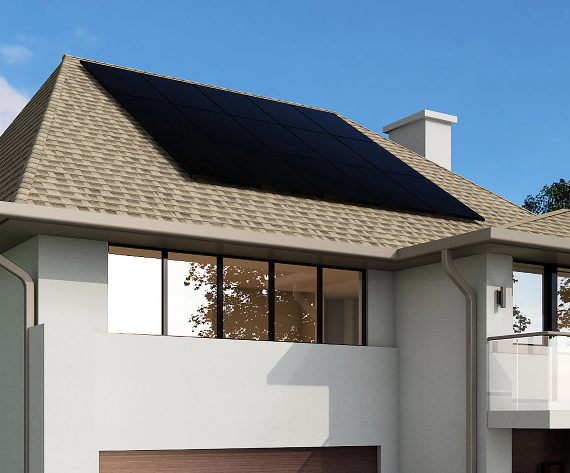
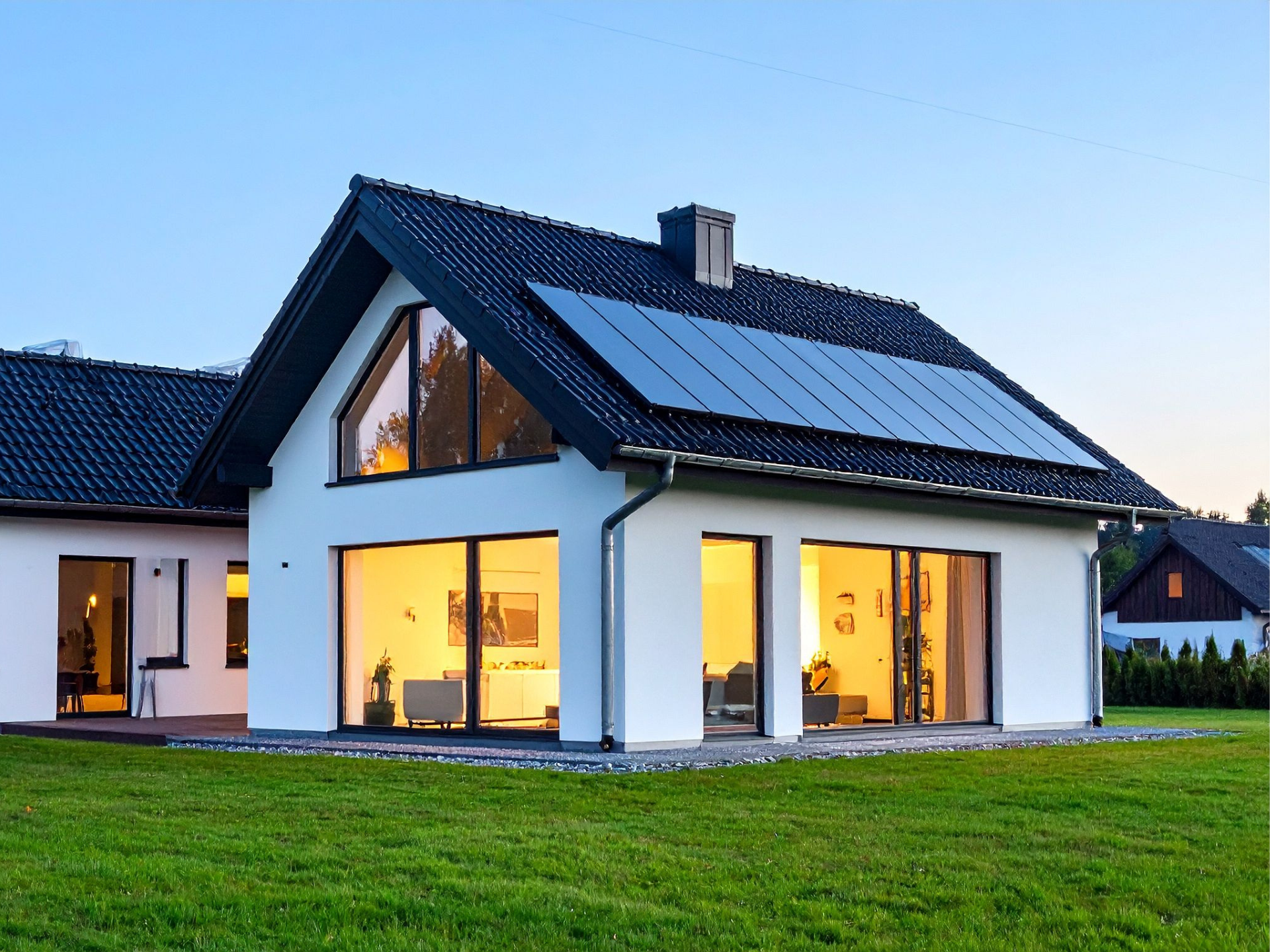
Aesthetics on period, listed or conservation-area homes. Standard on-roof panels can look out of place on a heritage property, and a minority of buyers do not like the look. Integrated in-roof panels, which sit flush with the tiles, remove most of this objection and are usually the better choice on a sensitive roof.
Roof condition. If the roof covering is near the end of its life, panels complicate the eventual re-roof, because they have to come off and go back on. Fitting solar to a roof in good condition, or dealing with the roof first, avoids this.
An ageing or poorly maintained system. A tired system with an inverter due for replacement and no records is worth less than a well-kept one. Documentation and remaining warranties protect the value here.
Leased or “rent-a-roof” panels. This is the big one. A lease over your roof space can put buyers and their mortgage lenders off. The owned-versus-leased section below covers it in full.
A system that is too large or badly sited. An oversized array crammed onto a shaded or awkward roof looks like a mistake to a surveyor and rarely pays back. Sizing the system to the property and the household’s actual use, rather than the biggest array that fits, keeps the value intact. This is the sensible reasoning behind the informal “20% rule” (see the FAQ), which is about right-sizing, not maximising.
Every one of these risks is avoidable with the right design and honest advice up front, which is the case for using an established local installer rather than the cheapest quote.
Owned solar transfers to the buyer as an asset and adds value; leased or “rent-a-roof” solar hands a third party an interest in your roof and can complicate the sale. This distinction is the single most important factor in whether solar helps or hinders a sale, and it is the one most homeowners have never had explained to them.
| Owned outright | Leased / rent-a-roof | |
|---|---|---|
| Who owns the panels | You do, as a fixture of the property | A solar company, under a lease (often 20–25 years) |
| Who gets the bill savings | You, then the buyer | You get daytime electricity; the company keeps the rest |
| Who gets SEG / export income | The system owner, so you then the buyer | The solar company keeps it |
| Effect on sale price | Adds value | Neutral at best; can reduce value or deter buyers |
| Effect on mortgage approval | Straightforward for most lenders | Can restrict lenders or the loan-to-value offered |
| What transfers to the buyer | The panels, warranties and MCS certificate | An ongoing commercial lease they must accept |
Rent-a-roof deals were common between roughly 2010 and 2016. A company installed panels free in return for a long lease over the roof and kept the government Feed-in Tariff. Today those leases still have years to run, and a buyer’s solicitor and lender will look at them closely.
For a leased system, a mortgage lender will usually want the lease to meet the standards set out in the UK Finance Mortgage Lenders’ Handbook (clause 5.20 for England and Wales; the rules differ in Northern Ireland, where clause 5.14 applies and a roof-space lease is not acceptable at all). In practice, lenders typically want the lease to confirm that the homeowner pays no ground rent or admin fees, that the solar company is liable for any roof damage it causes, that the lender can end the lease or have the panels removed without penalty if it ever has to repossess, and that the homeowner can lift the panels temporarily for roof repairs. See the UK Finance guidance on solar panels and roof leases.
If a lease does not comply, it can often be fixed with a Deed of Variation, but that means solicitor and admin fees and a delay of a few weeks. Some lenders decline leased-panel cases outright. None of this applies to a system you own: the panels simply pass to the buyer as part of the house. It is the clearest reason to buy a system rather than sign a lease, and to choose an installer who sells you the system outright.
Yes. Solar panels usually improve a property’s EPC rating by one to two bands, adding around 18 SAP points on average, with the exact gain depending on system size. Because a home’s EPC band feeds into how buyers and lenders judge it, that improvement is a large part of how solar adds value.
Solar helps the EPC score because the assessment (built on the government’s Standard Assessment Procedure, or SAP) rewards on-site generation that cuts the modelled cost of running the home. A bigger, well-sited array shifts the score further.
The band you reach matters more than the points, because value tends to move in steps between bands. Analysis by Knight Frank, reported by the Mortgage Advice Bureau, gives a useful guide to how much an EPC improvement is worth over and above normal local price growth:
| EPC improvement | Typical value uplift | Illustrative figure |
|---|---|---|
| D up to C | around +3% | roughly £9,000 |
| E up to C (two bands) | around +8.8% | roughly £29,000 |
| F or G up to C | around +19.6% | roughly £64,400 |
Source: Knight Frank, reported by Mortgage Advice Bureau. Figures corroborated against multiple independent reports (2022–24 Knight Frank analysis of ~30,000 improved properties).
Two points keep this honest. Solar alone will not always jump a home two full bands; the starting point and the rest of the fabric matter. And Nationwide’s research is a reminder that the EPC effect on owner-occupied prices, while real, can be modest in practice (about 1.6% for the top bands). The regulatory angle is firmer: with minimum EPC standards tightening for rented homes, a good rating is becoming less of a bonus and more of a requirement.
A battery and, later, a heat pump compound the effect, because together they cut the modelled running cost further and push the EPC score higher again.
A solar battery can add value on top of the panels, mainly by increasing the bill saving a buyer inherits, though the uplift does not always cover the battery’s cost on its own. Battery-related searches are common, and the honest answer has a few parts.
A battery stores daytime solar for use in the evening, so the household buys far less peak-rate electricity. That raises self-consumption, which is where most of the financial benefit of solar sits, and it is a saving the next owner keeps. A battery can also nudge the EPC score up and adds a resilience selling point, since some systems keep key circuits running during a power cut.
The catch to be straight about: a battery is a meaningful extra cost, and the value uplift on paper may not match that cost pound for pound. Its payback comes mainly through the bigger day-to-day saving over the years, not the resale bump alone. Batteries also carry their own warranty and expected lifespan, and a buyer will want to see both. Pairing solar and battery from a single installer, with one set of documents and warranties, presents far better at sale than a battery bolted on later by someone else.
Related: is home battery storage worth it?
Export income does not simply vanish when you move, but the Feed-in Tariff and the Smart Export Guarantee are handled differently, and getting the paperwork right protects the value for both you and the buyer.
If your home has a Feed-in Tariff (FiT) agreement, then the income normally transfers with the property. The FiT closed to new applicants on 1 April 2019, but existing agreements run for their full term (usually 20 years). Because those legacy rates are generous and pass to the buyer, a home still on FiT can command a premium. You notify the FiT licensee of the change of ownership, and the new owner completes a change-of-ownership form. See Ofgem’s Feed-in Tariff information.
If your solar is on the Smart Export Guarantee (SEG), then the arrangement does not transfer automatically. Your SEG contract ends when you sell; you give your supplier notice and a closing meter reading, and the new owner sets up their own SEG tariff with a supplier of their choice. A smart meter and a valid MCS certificate are needed to register. Handing over the MCS certificate and system details in the sale pack makes this a five-minute job for the buyer rather than a hurdle. See Ofgem’s Smart Export Guarantee information.
The practical takeaway: whichever scheme applies, keep the documents together and hand them over. A buyer who can see exactly how the export income works is a buyer who values the panels properly.
Yes, but less than most people assume. A well-maintained older system still adds value; a neglected one with no records adds far less. Age itself is not the problem — missing evidence and worn-out parts are.
Modern panels degrade slowly, at roughly 0.5% a year, so a ten-year-old array typically still produces around 95% of its original output. The bigger factors are the generation of technology and the inverter. Systems fitted before around 2015 often used lower-efficiency panels and older inverters, so they generate less and look dated to a knowledgeable buyer. Inverters also have a working life of roughly 10–15 years, so a buyer may need to budget for a replacement, and it is fair for them to factor that in.
What protects the value is documentation. A transferable MCS certificate, remaining manufacturer warranties, and a record of generation show a buyer the system is genuine, compliant and performing. A ten-year-old system with full paperwork is a straightforward asset; the same system with no records is a question mark.
The percentage uplift is broadly similar across property types, but the cash figure varies with the value of the home and how suitable the roof is. The table below applies the researched ranges to typical UK property values, using our current pricing guide for the cost column. These are illustrative calculations to show the shape of the return, not valuations of any specific home.
| Property type | Typical system size | Typical install cost | Indicative value uplift | Notes |
|---|---|---|---|---|
| 3-bed semi | ~3.5–4 kWp | ~£6,000–£8,000 | ~4%–7% of value | The most common UK case; good roof space and strong buyer demand. |
| 4-bed detached | ~5–6 kWp | ~£8,000–£11,000 | ~4%–7% of value | Larger roof, larger cash uplift on a higher-value home. |
| Bungalow | ~3–4 kWp | ~£5,500–£8,000 | ~4%–7% of value | Often single-storey with a large, accessible roof; frequently well suited. |
| New build | ~3.5–5 kWp | ~£6,000–£9,000 | ~4%–7% of value | Increasingly expected by buyers; strongest demand signal. |
| Period / Victorian | varies | varies (in-roof premium) | varies | In-roof panels usually the right choice; check conservation-area rules first. |
| Flat / maisonette | usually not viable | n/a | n/a | Shared or leasehold roofs mean solar is rarely an option without freeholder consent. |
Illustrative only. Uplift percentages are drawn from the studies cited above; install costs are indicative ranges from our own UK solar panel cost guide and should be confirmed with a quote for the specific property.
No. In most cases, homes with owned solar panels sell faster, not slower, because low running costs are now near the top of buyer wish lists. The exceptions are specific and, again, come down to ownership and documentation.
Buyers increasingly filter for energy-efficient homes and factor bills into their offers, so owned solar is a genuine draw. Where solar can slow a sale is with a leased or rent-a-roof system, missing paperwork, or an unattractive install on a sensitive property. Every one of those is a documentation or design issue, not a fault with solar itself.
What buyers actually ask about is simple: do you own the panels, how old is the system, what warranties remain, and what are the real bills. If you can answer all four with paper in hand, solar helps you sell.
Put together a simple documentation pack before you list. It reassures buyers and their solicitors and removes the friction that slows sales.
Different people in a sale value solar in different ways, and knowing what each one focuses on helps you present the system in the best light. This page is written mostly from the installer’s side, so here is the view from the other four seats at the table.
The buyer cares about running costs. They want to know the panels are owned, the bills are genuinely lower, and the EPC rating is strong. Concrete numbers beat green adjectives every time.
The estate agent cares about the marketing angle. Owned solar, a good EPC and evidence of low bills give them a real selling point and, often, a faster sale. Ask them to feature the panels, the EPC band and the annual saving in the listing.
The RICS surveyor or valuer treats solar carefully. In a mortgage valuation the uplift is not automatic; the valuer looks at comparable local sales, so the added value shows up where the local market rewards it. Owned, MCS-certified, well-documented panels are treated as an asset; a leased system may be flagged as a complication. Note the UK terms here: it is a surveyor or valuer, and a mortgage valuation, not a US “appraiser” or “appraisal”.
The mortgage lender cares about legal cleanliness. For owned panels there is rarely an issue. For leased panels, the lender checks the roof lease against the UK Finance Handbook and may limit the loan-to-value or decline the case if the lease does not comply.
EDITOR NOTE E-E-A-T opportunity (first-party) — add a short attributed quote from a local estate agent or a RICS surveyor on how they treat solar in a valuation. A named, credentialed quote here is a strong differentiator and directly answers the sceptical forum threads ranking for this keyword. This cannot be fabricated; source a real quote.
Solar is not the improvement that adds the most raw value to a UK home, but it is one of the few that also pays you a monthly dividend for decades. That combination is its real advantage. The table compares solar with the improvements buyers most often weigh up.
| Improvement | Typical cost | Typical value added | Ongoing payback beyond value |
|---|---|---|---|
| Loft conversion (bedroom + bathroom) | £20,000–£65,000 | up to ~24% (Nationwide) | None; value only |
| Single-storey extension | £55,000–£100,000 | up to ~24% where it adds a bedroom (Nationwide) | None; value only |
| New kitchen | £8,000–£25,000 | often less than the spend | None; value only |
| Double glazing | varies | modest | Some bill saving |
| EPC upgrade to band C | ~£8,000 | ~3% (D→C, Knight Frank) | Ongoing bill saving |
| Solar panels (owned) | from ~£6,000 (cost guide) | ~6%–7% | Ongoing bill saving + export income |
Sources: Nationwide house price research (loft/extension); Knight Frank via Mortgage Advice Bureau (EPC); Stratford Energy cost guide (solar). Non-size-adding improvements (kitchen, glazing) are shown qualitatively because a reliable single percentage is not available.
The honest reading: a loft conversion or extension adds more headline value than solar, because it adds floor space. But those projects stop paying the day the work finishes. Solar keeps cutting bills and earning export income every year you or the next owner live in the home, which is why it belongs in a different column from a new kitchen.
For a buyer, the value of solar is only as strong as the evidence behind it, which is why we hand over a full documentation pack with every installation. When your home sells, the buyer inherits proof that reassures their solicitor, surveyor and lender:
Banks, mortgage lenders, solicitors and buyers recognise this pack as evidence of a compliant, quality installation, which is exactly what turns “there are panels on the roof” into measurable added value.
A well-designed system adds value; a badly sited one can subtract it, so the way panels look matters as much as what they generate. We offer three approaches so the system suits the property rather than the other way round:
Whichever suits your home, matching the system to the roof, the orientation and the look of the property is what keeps solar an asset at resale rather than a compromise.
Yes, for most homeowners with a suitable roof, provided you look at the whole return rather than any single number. Here is the honest maths.
A typical 4-bedroom home saves around £500–£700 a year on energy (per our own customer data), with a payback period of roughly 5–7 years. On top of that, owned solar adds an estimated 6%–7% to the property’s value and can earn export income through the SEG. Add a battery and the annual saving grows because you use more of what you generate.
The point worth stating plainly, because the sceptics online are half right: the value uplift on its own usually does not cover the full cost of the system. Solar makes sense because of the three returns combined — the bill savings, the export income and the added value — not because of the resale bump alone. Judged that way, and with a well-designed system that is properly documented, it is one of the few home improvements that keeps paying you back long after the work is done.
If you want to see the numbers for your own roof, speak to our team for a straight assessment with no obligation.
Discover how commercial Solar panels can transform your business in 2025. This comprehensive guide explores financial benefits, grants, installation essentials, and key considerations for you to take control of your energy. This guide will support you in making informed, confident decisions about clean, on-site power.
No, in most cases it’s easier. Homes with owned solar tend to attract more interest and sell faster, because buyers value the low running costs and stronger EPC. Selling only becomes harder with a leased or “rent-a-roof” system, or when the paperwork is missing.
UK research points to roughly 6.1%–7.1%, about £14,000–£16,000 on an average home, with wider estimates from around 1% to 14%. The figure depends on ownership, system size, the EPC improvement and local demand, so treat it as a range, not a guarantee.
Usually not. Owned, well-documented panels add value. Value can be held back by leased or rent-a-roof panels, an ageing system with no records, or an unattractive install on a period or listed property. In-roof panels and good paperwork remove most of those risks.
Yes. A battery can add value on top of the panels by increasing self-consumption, which raises the bill saving a buyer inherits, and by adding backup during power cuts. The uplift may not fully cover the battery’s cost by itself; its main return is the bigger annual saving over time.
The “20% rule” is an informal design guideline, not a legal one. It usually means sizing a system to produce around 20% more than your average use (or to cover about 80% of your needs), leaving a buffer for cloudy days, losses and future demand. It’s about sensible sizing rather than home value directly.
MoneySavingExpert, founded by Martin Lewis, is broadly positive on solar for owner-occupiers with a suitable roof who plan to stay long enough to see a return, while stressing you should check the maths for your own home first. It notes solar can raise property value but flags that the uplift may not always outweigh the install cost. Read our summary of what Martin Lewis says about solar panels.
For most owner-occupiers with a decent roof, yes, on a long-term view. The case rests on three returns together: bill savings, export income and a property value uplift. Payback on a typical system now runs to around 5–7 years, after which it keeps saving for the rest of its life.