
Energy prices are rising again: What October 2026 means for your home
Energy bills are rising again this October. But while many households are asking whether energy prices will ever come down, a much bigger change is happening beneath the headlines: UK electricity demand is beginning to rise again after around two decades of decline.
Ofgem has confirmed that the domestic energy price cap will increase by 4% from 1 October 2026, taking the typical annual bill for a dual-fuel household paying by Direct Debit from £1,663 to £1,723. That’s an increase of £60 a year, or around £5 a month based on typical consumption.
The increase affects around 22 million households on default tariffs covered by the price cap. It also follows a 13% increase in July, meaning households have faced two significant price-cap increases within three months. National media have described the new level as the highest household energy-bill level in three years.
So, naturally, many homeowners are asking: will energy prices go down again?
The truth is that nobody can say for certain. Ofgem’s next price-cap period, covering January to March 2027, has not yet been set. Initial forecasts aren’t promising though, with many suggesting that an increase as high as 10% could be on the cards.
But there is another question worth asking:
How much control do you have over the electricity your home buys from the grid?
What does the £1,723 energy price cap actually mean?
First, it’s important to understand that £1,723 isn’t a maximum annual bill.
The price cap limits the rates suppliers can charge on eligible default tariffs, including electricity and gas unit rates and standing charges. Your actual bill will depend on how much energy your household uses, where you live, how you pay and your meter type.
For October to December 2026, the average electricity unit rate for Direct Debit customers is 26.32p/kWh, with an electricity standing charge of 54.83p per day.
You can’t control the price your supplier charges.
But you can change how much electricity your home needs to buy.
And that’s where the wider energy story becomes particularly interesting.
Why UK electricity demand fell for 25 years
For roughly 20–25 years, UK electricity consumption was broadly flat or declining.
Several structural changes contributed to this. LED lighting and more efficient appliances reduced household electricity use, while better insulation and energy efficiency measures lowered demand across homes and businesses. At the same time, the decline of heavy manufacturing and the offshoring of some manufacturing reduced industrial electricity consumption.
Together, these changes meant that the UK economy could grow without a corresponding increase in electricity consumption.
During this period, the UK economy grew while electricity demand generally did not.
This became known as the decoupling of GDP from electricity consumption.
But the direction is now changing.
Electricity demand is rising again
UK electricity demand increased by around 3% in 2025, according to analysis by Imperial College London for Drax Electric Insights. It was the fastest annual increase since 2001 and the second consecutive year of demand growth, something not seen since 2002–03.
This is significant because it suggests the UK may be reaching a turning point after roughly two decades of declining electricity consumption.
The reason?
We’re electrifying more of the economy and more of everyday life.
- Electric vehicles
Every time a petrol or diesel vehicle is replaced with an EV, some of the energy previously supplied by petrol or diesel becomes electricity demand.
As millions more cars, vans, buses and commercial fleets become electric, electricity consumption will increase.
Heat pumps can deliver heating very efficiently, but replacing gas boilers with electric heating transfers more of our energy demand onto the electricity system, particularly during colder periods.
- AI and data centres
A newer source of electricity demand is the rapid growth of AI and cloud computing.
Data centres require substantial amounts of electricity to power and cool their infrastructure. Analysis cited in the supplied research puts data centres at around 3–4% of UK electricity demand, with their usage having grown significantly since 2020.
- Industrial electrification
The increasing electrification of domestic services like heating and motoring, alongside wider changes to the energy landscape, makes generating and storing your own electricity increasingly interesting.
NESO’s Future Energy Scenarios 2025 reflects this much bigger picture: electricity demand is expected to grow substantially as transport, heating and other sectors electrify. In its pathways to net zero, NESO projects electricity demand could rise to between 705 and 797 TWh by 2050, compared with around 290 TWh today.
What does this mean for your home?
The increasing electrification of domestic services like heating and motoring and the wider changes to the energy landscape make generating and storing your own electricity increasingly interesting.
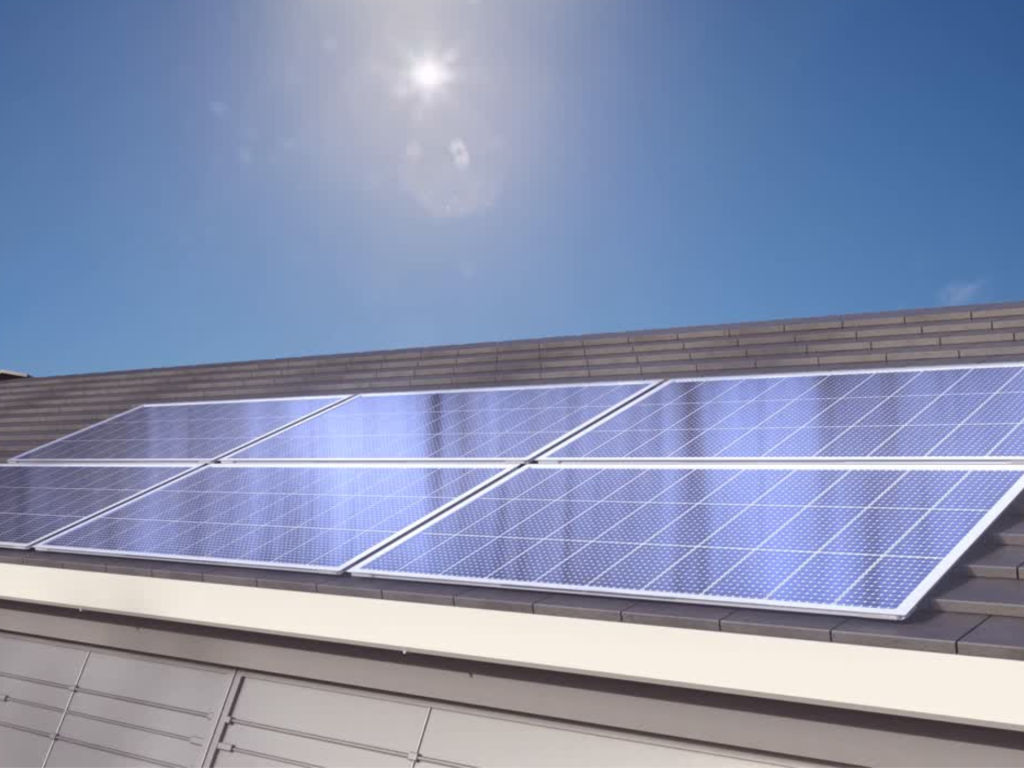
Solar PV (photovoltaic) panels allow your home to generate electricity rather than buying all of it from the grid.
When your solar panels are generating electricity at the same time you’re using it, you can reduce the amount of electricity you need to purchase.
A battery storage system can take this a step further by storing surplus solar electricity for later use.
Instead of having to use your solar generation immediately, you can store electricity when your panels are producing more than your home needs and use it later when generation falls.
And as smart energy tariffs become increasingly important, batteries can potentially be used more intelligently around electricity prices too. Find out how tariffs such as Octopus Flux work for solar and battery owners in our guide to Octopus Flux.
That means the question isn’t necessarily:
What’s the biggest solar system or battery I can install?
It’s:
What energy system makes sense for the way my home actually uses electricity?
The future of home energy is about control
Nobody knows exactly what energy prices will look like in five or ten years.
Prices could rise. They could fall. Government policy and energy markets will continue to change.
But one thing is becoming increasingly clear: electricity is going to play a much bigger role in our lives.
As we move towards electric cars, electric heating and an increasingly electrified economy, demand for electricity is growing. At the same time, the UK needs more renewable generation, storage and flexibility to meet that demand.
For homeowners, that makes understanding how, when and where your electricity is generated and used increasingly important.
At Stratford Energy Solutions, we believe the right solution starts with understanding your home – your electricity consumption, when you use energy, your property and your future plans.
From there, solar PV, battery storage and smart energy management can be considered as part of a solution designed around you.
See how other homeowners are taking control
From families across the Midlands, from Oxfordshire, Gloucestershire and Worcestershire through Warwickshire and into Coventry, Birmingham and beyond, our residential case studies show what different solar and battery systems can look like in real homes.
Stratford Energy Solutions has completed thousands of installations, with almost 100 residential case studies showing how homeowners across the Midlands are using solar PV and battery storage to generate, store and make better use of their own electricity.
From families in Leamington Spa and Worcester to homeowners in Stratford-upon-Avon, our residential case studies show what different solar and battery systems can look like in real homes.
See our residential case studies
Take more control of your home energy
If the latest energy price increase has prompted you to rethink how much electricity your household buys from the grid, now is a good time to understand your options.