Reviewed by Georgia Howson, MCS Certified Solar Expert

Reviewed by Georgia Howson, MCS Certified Solar Expert
Stratford Energy Solutions installs MCS certified solar panels, battery storage and EV chargers across Oxfordshire and the surrounding region, from our base in Stratford-upon-Avon. We have been fitting systems across the region for over 15 years.





We work with homeowners across Oxfordshire, from Oxford, Abingdon, Bicester, Banbury, Witney, Didcot and Wantage to smaller communities such as Chipping Norton, Thame, Wallingford, Woodstock and Henley-on-Thames. Every system is designed around your roof, your house and how your household actually uses power, then fitted by our brilliant in-house solar engineers. We pride ourselves on never using subcontractors for our installations. Solar, battery and EV charging are quoted as one job, not three. Oxfordshire has a particularly varied mix of urban, suburban and rural properties, from historic market-town houses and traditional village properties to Victorian terraces, inter-war semis and newer developments. That means roof forms, shading and heritage considerations can differ significantly from one property to another.
Four stages, from your first call to the day the system switches on. Most Oxfordshire jobs run from enquiry to commissioning in a matter of weeks rather than months.
1.
Call us on 01789 262 411 or send the form. One of our Renewable Energy Experts, will talk through your property, your bills and what you want the system to do.
2.
We look at roof pitch, orientation, shading and your actual consumption before we quote. The quotation holds for 30 days. If you go ahead, a deposit of up to 25% confirms the order, and you have 14 days to change your mind under the Consumer Contracts Regulations 2013.
3.
Most residential systems are on and wired within one to two days. The same in-house team does the work. We agree the date with you and give reasonable notice.
4.
We commission the system, set up monitoring on your phone, issue the MCS certificate and handle the G98 or G99 notification to your local electricity network operator. We’ll also take care of this paperwork for you, making the process as straightforward as possible.
We cover Oxfordshire and its towns, villages and surrounding rural communities, including Oxford, Banbury, Bicester, Abingdon, Witney, Didcot, Wantage, Thame, Wallingford, Henley-on-Thames, Chipping Norton and Woodstock. Oxfordshire is administered through five district councils and Oxford City Council, so planning and local policy can vary depending on the property’s location.
Our engineers work across the county, including communities such as Kidlington, Carterton, Burford, Chipping Campden, Charlbury, Faringdon, Grove, Thame, Watlington and Bicester. This is a broad mix of urban and rural Oxfordshire, so the properties we survey range from town-centre terraces and traditional cottages to larger detached homes and properties with enough land to consider alternatives such as ground-mounted solar.
Oxfordshire roofs need individual consideration because the county’s housing stock changes considerably between its towns, villages and newer developments. Historic market towns and villages contain traditional stone, brick and timber-framed properties with varied roof pitches, dormers, extensions and chimneys, while Victorian and Edwardian suburbs around Oxford and other larger towns include terraces and substantial semi-detached houses. More recent estates can offer larger and more regular roof layouts, while rural properties may have garages, outbuildings or enough land for ground-mounted solar. We survey each property properly rather than assuming.
Oxfordshire is within easy reach of our Stratford-upon-Avon base, particularly across the western parts of the county, and sits comfortably within our wider regional service area. Homeowners across Oxfordshire can benefit from the support of our experienced in-house team.
Our latest solar panel and battery storage projects include genuine Stratford Energy installations completed for homeowners across Oxfordshire. Explore our local case studies to see the systems we have installed across the county.
No obligation, no hard sell, and if we genuinely think solar isn’t the right option for your property, we’ll tell you.
| Average annual sunshine | The Oxford Met Office station provides a useful reference for the county, recording an average of 1,615.48 hours of sunshine per year. Sunshine levels will vary across Oxfordshire. |
| Sunniest and darkest months | At the Oxford Met Office station, July is typically the sunniest month, averaging 211.99 hours of sunshine, while December is the darkest, averaging 57.60 hours. |
| Local planning authorities | Planning applications in Oxfordshire are handled by Cherwell District Council, Oxford City Council, South Oxfordshire District Council, Vale of White Horse District Council or West Oxfordshire District Council, depending on the property’s location. |
| Conservation areas | Oxfordshire has more than 250 conservation areas across its five district and city council areas. Properties within these areas may be subject to additional planning controls, so homeowners should check the current designation with the relevant local planning authority. |
| Areas with extra planning control | Article 4 Directions apply in some parts of Oxfordshire and can remove permitted development rights for certain types of work. Areas affected include parts of Didcot, East Hagbourne, Henley-on-Thames and Wallingford. Restrictions vary by property and location, so homeowners should check with the relevant local planning authority before starting work. |
| County net zero targets | Oxfordshire County Council is working towards the county becoming carbon neutral well before 2050, with a county-wide ambition to reach net-zero emissions during the 2040s. The council is also aiming for its own estate and operations to become carbon neutral by 2030. |
Solar panels generate electricity from daylight rather than heat, so Oxfordshire does not need hot weather for solar to work. The Met Office’s Oxford 1991-2020 dataset records around 1,615 hours of sunshine annually, with substantially more sunshine in summer than winter. Your actual generation will depend on your roof direction, pitch, shading and system size rather than simply the number of sunny days.
Planning deserves particular attention in Oxfordshire because the county combines historic market towns, traditional villages, rural properties and newer developments, with extensive heritage protection across its five districts and Oxford City. The relevant planning authority depends on the property’s location, and conservation areas and Article 4 Directions can introduce additional controls. Oxfordshire also contains parts of the Cotswolds, Chilterns and North Wessex Downs National Landscapes, where landscape protection forms part of the planning context. We therefore check the individual property and its relevant planning authority rather than assuming the same rules apply throughout Oxfordshire.
For most Oxfordshire homeowners, the right solar and battery system depends on the property, energy use and how much electricity you want to generate and store. As a guide, a full system is typically a five-figure investment, with payback often falling within 5 to 7 years.
A typical four-bedroom home may save around £500 to £700 a year on electricity, although the actual figure will vary with system size, usage patterns and energy prices.
We do not publish fixed package prices because we do not sell standard packages. Every system is designed around the home, so we assess the roof, your electricity use, your family’s habbits and the best system layout before providing a firm quotation.
What we can tell you before the survey:
0% VAT
Domestic solar and battery installations carry zero-rate VAT until 31 March 2027. This directly reduces the overall cost of your installation.
Export payments
Because we are MCS certified, your system qualifies for the Smart Export Guarantee. Your supplier pays you for electricity you send back. We handle the certification side.
How you pay
A deposit of up to 25% confirms the order. The balance is due on completion, before we release commissioning and certification. The survey and the quote cost nothing.
What You Need to Know
We are not the cheapest installer in Oxfordshire and we do not try to be. We use premium equipment from Viridian Solar, SunPower Elite, SolarEdge, SigEnergy and Tesla, and that is what makes savings of 80 to 98% achievable.
Your payback depends far more on how much electricity you use than on the size of the array. A household running an EV, a heat source or two people working from home could help reduce the payback period further.
We install six things, and most Oxfordshire customers take two or three of them as one system. Taken together, these are one system, not four purchases. See how the whole-home setup fits together.
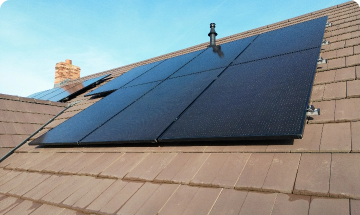
On-roof solar panels
The standard fit, mounted on brackets above the tiles. Works on suitable pitched roofs across Oxfordshire and the surrounding villages.

In-roof solar panels
Panels set flush into the roof line instead of sitting on top. Worth asking about in conservation areas and on properties where appearance is part of the planning conversation.
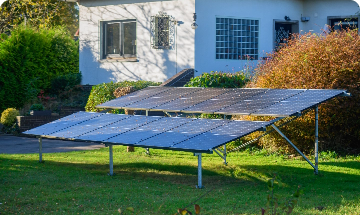
Ground-mounted solar
For homes with the garden space and a roof that will not take an array.
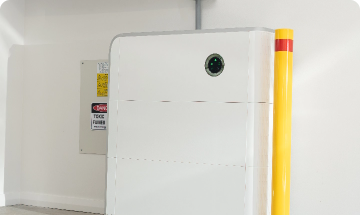
Home battery storage
SigEnergy and Tesla Powerwall. Stores what you generate in the day for use in the evening. Can be retrofitted to panels fitted by someone else.
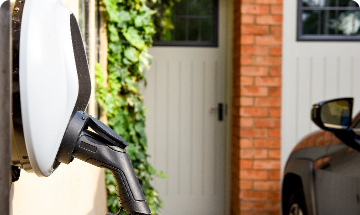
EV charging
A home charger wired into the same system, so you can use more of the energy generated by your solar panels to charge your car, reducing your reliance on the grid.
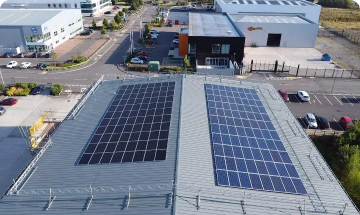
Commercial solar
For business premises across the city, quoted and installed by the same team.
Four key checks can help you choose the right solar installer.
Check they are MCS certified.
Not simply as a badge of accreditation, but because without it your system will not qualify for export payments under the Smart Export Guarantee. Ask for the certificate number and look it up on the MCS register yourself. Ours is NIC1758.
Ask who is actually doing the work.
Ask for a design, not a package.
A real proposal names the panels, the inverter, the battery capacity and the expected output for your roof at your orientation. Your quote should be tailored to your property, energy usage and individual requirements.
Check the consumer protections.
Look for RECC and TrustMark registration, ask how long the workmanship warranty runs, and ask what happens if the company stops trading. RECC gives you an independent dispute route that does not depend on the installer being cooperative.
Three reasons come up in almost every conversation we have with customers in the city.

Premium equipment, designed for the property.
We only fit premium supplier kit, with manufacturer warranties running up to 40 years and our own 5 year workmanship warranty on top. Every Oxfordshire property is different, which is why we design each solar system around your home and energy requirements.

Local and accountable.
Oxfordshire is within our wider regional service area, with 25 people on the payroll, in-house MCS certified engineers and friendly Renewable Energy Experts on the other end of the phone. We do not claim to have an Oxfordshire office. National installers sell the job and subcontract the work. If your system needs attention in the years following installation, having reliable ongoing support can make all the difference.

Protected long term.
MCS certified (NIC1758), RECC registered, TrustMark endorsed, NICEIC Domestic Installer and Approved Contractor. Four independent bodies, each providing additional protection and support should you need it.
Many Oxfordshire installations can still be completed without a full planning application, but the county’s extensive heritage and landscape protection means the individual property needs to be checked. Planning applications for residential development are dealt with by the relevant district or city council, and conservation areas and Article 4 Directions can introduce additional controls.
Not necessarily. Roof-mounted solar panels can fall under permitted development where the relevant national conditions are met. However, conservation areas, Article 4 Directions, listed buildings and some other protected locations can introduce additional controls. Because Oxfordshire has five district councils plus Oxford City Council, the relevant local requirements depend on the individual property’s location. We check the property before installation.
For most houses, roof-mounted solar panels fall under permitted development. In simple terms, this means you can usually install them without making a planning application.
There are still some basic rules. The panels should not sit higher than the top of the roof and should stay close to the roof surface. Different limits apply to panels installed on flat roofs.
Living in a conservation area does not automatically stop you from having solar panels. However, Oxfordshire has extensive conservation-area coverage and some locations have additional planning controls.
Article 4 Directions can remove permitted development rights for specified works, while listed buildings require particular care. The relevant district or city council should therefore be checked for the individual property rather than assuming the same rules apply throughout the county.
An Article 4 direction is an extra local planning rule that removes some of the rights homeowners would normally have to make changes without permission.
Article 4 Directions apply in a number of Oxfordshire locations. South Oxfordshire, for example, lists directions affecting parts of Didcot, East Hagbourne, Henley-on-Thames and Wallingford, while Cherwell confirms that Article 4 Directions may be used to maintain the character of its historic environment.
These directions apply to defined areas and specified works, so we check the exact property rather than assuming every Oxfordshire home is affected.
Listed buildings need particular care. If your home is listed, you will normally need listed building consent for work that affects its special architectural or historic interest, and planning permission may also be required.
Oxfordshire’s district and city councils are responsible for local heritage matters, so the property’s individual designation and setting need to be checked before work begins.
Stratford Energy is MCS certified under NIC1758.
MCS is the recognised quality standard for small-scale renewable energy installations. An MCS certified installation is also required if you want to apply for the Smart Export Guarantee and receive payments for eligible electricity exported back to the grid.
You can check an installer’s MCS status on the official MCS register before committing to any work.
Domestic solar and battery installations are zero-rated for VAT until 31 March 2027.
Yes, solar panels work well on many homes in Oxfordshire. The main factors are your roof’s direction, pitch, available space and how much shade it gets during the day. The property’s listed status, conservation-area position and location within a protected landscape can also matter in some parts of the county.
South-facing roofs often produce the most electricity, but east- and west-facing roofs can also be suitable. If your roof has heavy shading, limited space or planning restrictions, this may affect the type of solar panel system that can be installed, but with the latest technology and experience installing residential solar systems across the region, we can help you find the best system for your property.
A home survey is the best way to confirm what will work and how much electricity your system could generate.
Solar is likely to work well for you if:
Solar may not be the right option for your property if:
A Victorian terrace in Oxford or Banbury can be a very different solar project from a traditional stone property in a Cotswold or Chiltern village, a larger detached home around Abingdon or Witney, or a newer family home on the outskirts of Bicester or Didcot.
Older properties can introduce chimneys, dormers, extensions, mature trees and heritage constraints, while newer developments may offer larger and more regular roof layouts. Rural properties may also provide enough land for ground-mounted solar. The question is therefore not simply whether solar works in Oxfordshire, but how to design it appropriately for that particular property.
The survey is free, with no obligation to proceed. We use it to assess your home, energy use and what type of system could suit you best. That might include solar panels, battery storage or an EV charger, depending on your property and how you use electricity. If you choose to go ahead, your installation is supported by a 5-year workmanship warranty.
Equipment is covered by the relevant manufacturer warranty, and Stratford Energy can manage warranty claims on your behalf. You also have a 14-day cancellation period from signing under the Consumer Contracts Regulations 2013, with access to independent dispute resolution through RECC if required.
There are four key things you’ll need to share with us:
The survey itself takes about an hour. We check roof condition, pitch, orientation, shading through the day, your consumer unit and where a battery could sit. Following the assessment, you’ll receive a detailed written proposal tailored to your property and energy requirements.
These are the questions we are asked most often. If yours is not here, call us on 01789 262 411 or use the contact form.
Yes. We install solar panels, battery storage and EV chargers across Oxfordshire and the surrounding region.
Every system is quoted after a survey, so we do not publish fixed prices. What we can say is that a typical 4-bedroom home saves £500 to £700 a year and sees payback in 5 to 7 years. Domestic solar and battery installations carry 0% VAT until 31 March 2027, and the survey and quotation are free.
Yes. Solar panels generate electricity from daylight rather than heat, so they continue producing on cloudy days as well as sunny ones. The Met Office’s Oxford 1991-2020 dataset records 1,615.48 hours of sunshine annually, although your actual output will depend on roof direction, pitch, shading and system size.
Not necessarily. Roof-mounted solar panels can fall under permitted development, but conservation areas, Article 4 Directions and listed buildings can introduce additional controls. Oxfordshire has five district councils and Oxford City Council, so the relevant planning requirements depend on the property’s location. We check the individual property before installation.
Most residential installations are completed in one to two days on site. From first call to switch-on usually runs a few weeks, depending on equipment lead times, network approvals and whether any planning or listed-building consent is required.
Yes. Retrofitting a battery to an existing array is one of the more common jobs we do. We install systems including Tesla Powerwall and can integrate battery storage with an existing solar installation where the equipment and system design are suitable.
Yes, and it is usually cheaper to do it in one visit. Wiring the charger in alongside the solar and battery means the car can charge from your own generation instead of the grid. You pick the charger style and power output when the system is designed.
We are MCS certified under NIC1758, which you can check on the MCS register, and we are also RECC registered, TrustMark endorsed and NICEIC approved. Our residential workmanship warranty runs 5 years. Equipment faults go through the manufacturer warranty and we handle those claims for you. If a dispute cannot be settled directly, RECC provides an independent resolution route.
A typical 4-bedroom Oxfordshire home saves £500 to £700 a year, and a premium solar and battery system can cut a bill by 80 to 98%. The figure depends on how much electricity you use and when you use it. Savings estimates come from recognised modelling software and are indicative until we have surveyed your property.
We install solar panels, battery storage and EV chargers across Oxfordshire, including Oxford, Banbury, Bicester, Abingdon, Witney, Didcot, Wantage, Thame, Wallingford, Henley-on-Thames, Chipping Norton and surrounding towns and villages.
Tell us your postcode and roughly how much you spend on electricity, and we’ll take it from there. Your home survey is free, with no obligation to proceed.
Prefer to explore your options first? Use our online system builder to see what a solar and battery setup for your home could look like, with no contact details required.
Prefer to speak to someone? Speak to one of our Renewable Energy Experts 01789 262 411.