Author – Georgia Howson, MCS Certified Battery Storage Installer at Stratford Energy Solutions

Author – Georgia Howson, MCS Certified Battery Storage Installer at Stratford Energy Solutions
Ground mounted solar panels are installed directly on the ground rather than on a building roof, using frames that tilt the panels toward the sun to maximise energy generation. They are the preferred solution for homeowners with large gardens or unsuitable rooftops, farmers and rural property owners with open land, and commercial businesses with available ground space.
4.9 stars from 345 Google reviews. Founded 2010. MCS certified. RECC registered. TrustMark endorsed.





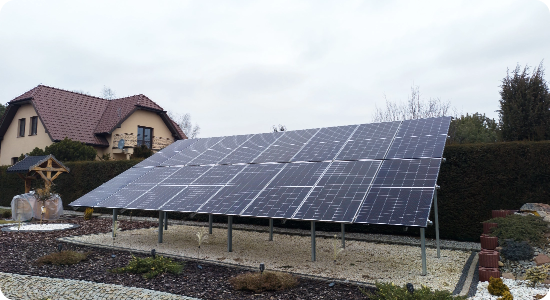
Ground mounted solar panels are solar photovoltaic (PV) systems installed on frames set directly into the ground rather than on a roof. The mounting structure holds the panels at an angle chosen to maximise sunlight capture based on the site’s latitude and orientation. Because the angle and direction are not fixed by the shape of a building, ground mounted systems can often be positioned for higher output than equivalent roof-mounted arrays.
A ground mounted solar system comprises the solar panels themselves, the mounting frames, a solar inverter, connecting cabling — which may require trenching if the installation is some distance from the property — and, optionally, a battery storage system.
System size ranges from six panels for a small residential installation up to hundreds of panels for a commercial or agricultural site. We design every system from scratch based on the site, available land, and the property’s energy requirements.
Ground mounted solar is particularly well-suited to three types of property and owner.
Properties with north-facing roofs, heavily shaded rooftops, listed building restrictions, or simply enough land to justify a ground array. In-ground installation allows panels to be positioned and angled for optimal solar yield regardless of roof orientation.
Farms and rural sites often have open south-facing land and high energy demands — a combination that makes ground mounted solar particularly cost-effective. Agricultural energy costs are significant, and a well-sized ground array can make a meaningful dent in them.
Businesses with owned car parks, yard space, or adjacent land can install ground mounted arrays to offset commercial energy costs. The scale of a commercial ground mount can be designed to cover a substantial proportion of daytime energy demand.
Ground mounted arrays can be incorporated into new build development plans from the outset — avoiding the structural constraints of retrofitting to a completed building and allowing optimal positioning during the design phase.
Ground mounted solar panels work on the same photovoltaic principle as roof-mounted systems — solar cells in the panels convert sunlight into DC electricity, which the inverter converts to AC electricity for use in the property. The difference is in the mounting structure rather than the technology. For most residential and small commercial installations, a well-positioned static ground mount delivers strong performance at a more cost-effective price point. We will advise on the right approach during your free survey.
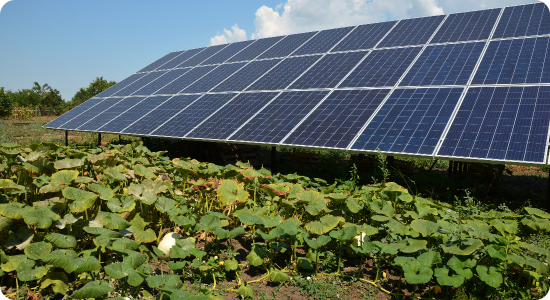
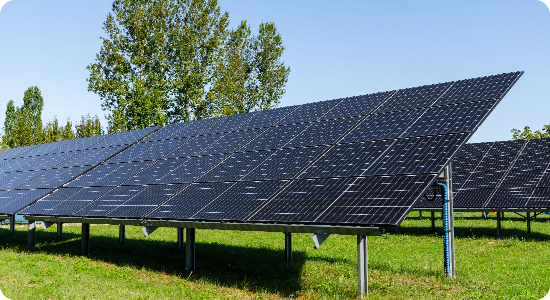
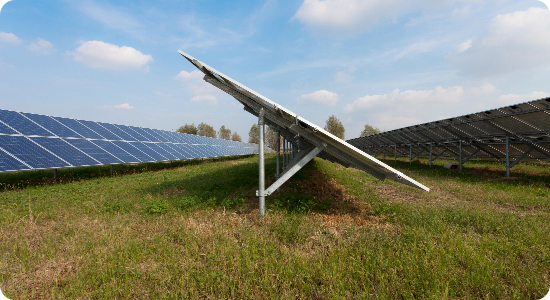
Static ground mounts are the most common type. The panels are fixed to a frame at a set angle — typically between 30 and 35 degrees for UK latitudes — and face south (or as close to south as the site allows). Once installed, the angle and direction do not change. Static mounts are simpler, lower-cost, and lower-maintenance than tracking alternatives.
Sun-tracking systems use motors to follow the sun’s position throughout the day, adjusting the panel angle to maintain optimal sunlight capture. Single-axis trackers move east-west; dual-axis trackers also adjust for seasonal elevation changes. Tracking systems generate more electricity per panel but cost significantly more to install and maintain. They are more common in large commercial or agricultural installations where the additional generation justifies the additional cost.

Optimal Panel Positioning
Because the mounting angle and direction are not constrained by an existing roof, a ground mounted system can be positioned for maximum solar yield. For properties with east-west-facing roofs or heavy shading, a ground mount on south-facing land can generate significantly more electricity per panel than a roof installation on the same property.

Simpler Maintenance and Access
Ground mounted panels are accessible without scaffold or roof access equipment. Cleaning, inspection, and any maintenance work is simpler and lower cost than equivalent work on a roof installation. This matters over a 25+ year system lifetime.

Scalability
A ground array can be sized to match your energy requirements rather than the constraints of your roof area. If your energy needs grow — for example, if you add an EV charger, a heat pump, or expand a business operation — a ground mount can often be extended more readily than a roof installation.

No Roof Structural Dependency
Roof-mounted solar relies on the structural integrity and condition of the roof. Ground mounts have no such dependency. For older properties, farm buildings, or structures where roof mounting is not appropriate, a ground array is often the only viable solar installation option.

Added Property and Land Value
A generating solar asset on land adds measurable value to rural and agricultural properties. For farm business tenancies and land valuations, a productive solar array is increasingly treated as a positive asset.
Ground mounted solar panels typically cost more than equivalent roof-mounted systems. The additional cost comes from the mounting frame, groundwork for the frame foundations, and cable trenching to connect the array to the property’s electrical system. However, the superior positioning of a ground mount can deliver higher energy generation — which improves the payback period relative to a less well-positioned roof installation.
Average solar panel installation costs in the UK can vary depending on your property, energy usage, and the size of the system required. Most residential solar panel installations typically range from £5,000 to £9,200, with many homeowners reducing their electricity bills over the long term through improved energy efficiency and lower reliance on the grid. Adding battery storage can further improve system performance by storing unused energy for later use, although this does require additional upfront investment.
| Factor affecting price | Detail |
|---|---|
| Mounting structure | Steel or aluminium frame, foundations or ground screws. Tracking systems cost more than static mounts. |
| Cable trenching | The distance between the array and the property’s inverter/consumer unit determines trenching cost. Longer runs increase cost. |
| System size | More panels = higher material and installation cost, but also higher annual generation and faster payback. |
| Site preparation | Some sites require ground clearance, levelling, or access track work before installation. |
| Battery storage addition | Adding a Tesla Powerwall 3 or GivEnergy battery adds £2,000–£5,000 but significantly increases self-consumption. |
| 0% VAT | All residential solar installations carry 0% VAT, already included in your quote. |
Ground mounted systems are often installed during a broader land or property improvement project, where combining the groundwork reduces the net additional cost. For an accurate quote based on your land, property type, and energy requirements, contact our team for a free site survey.
Several UK government schemes and tax rules make home battery storage more financially attractive. These are the main ones relevant to a Powerwall 3 installation.
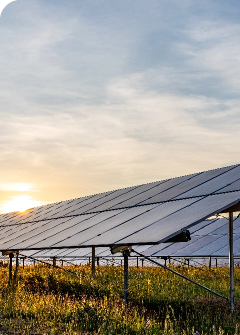
The Smart Export Guarantee, regulated by Ofgem, pays you for surplus electricity exported to the grid. Ground mounted systems can often be sized larger than equivalent roof installations — which means more surplus generation and higher SEG income potential. Compare current SEG rates at gov.uk.
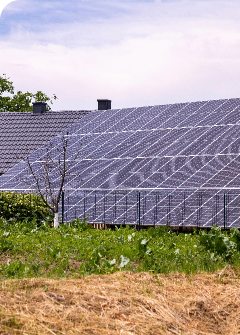
Residential solar panel installations — including ground mounted systems — carry 0% VAT. This applies to both the panels and the installation work and is automatically reflected in your quote.
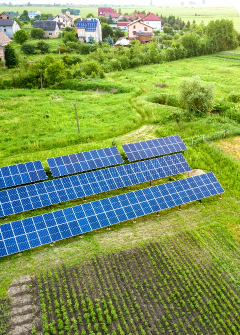
Some agricultural solar installations may qualify for rural business grants or farm development funding. Eligibility depends on land classification, intended use, and current scheme availability. Our team can advise during your free survey.
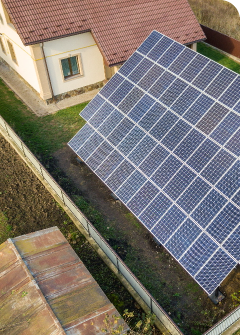
The government’s Warm Homes Plan may offer further energy efficiency funding routes as the policy develops. We will keep customers informed as details are confirmed.
Ground mounted solar is disproportionately valuable for rural and commercial properties — often the only viable solar option for sites where roof mounting is impractical, structurally unsuitable, or simply not the right fit.
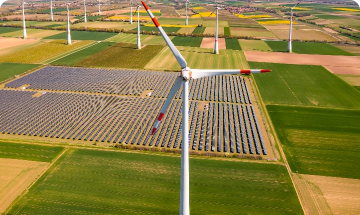
Agricultural and Farm Solar
Farms have two things that make ground mounted solar particularly compelling: high energy consumption and available south-facing land. Agricultural energy costs represent a significant overhead for most farm businesses. A well-designed ground array can cover a meaningful proportion of daytime demand and generate SEG income on surplus. We design systems for farms, equestrian properties, and agricultural businesses across the Midlands.
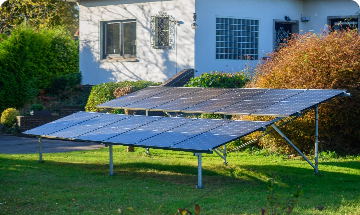
Rural and Estate Properties
Large rural properties often have north-facing or heavily shaded rooftops but open south-facing gardens or paddocks. A ground mount on available land frequently outperforms what a roof installation would achieve on the same property.
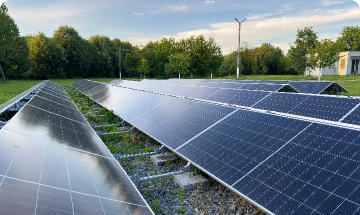
Commercial Properties with Available Land
Businesses with owned car parks, yard space, or adjacent land can install ground mounted arrays to offset commercial energy costs directly. Ground mount solar can also be combined with EV charging infrastructure — charging fleet vehicles or customer EV chargers directly from solar generation.
For commercial and agricultural systems, contact our commercial team for a bespoke survey and energy modelling. We install residential and commercial ground mount systems across Warwickshire, the West Midlands, Gloucestershire, Oxfordshire, and surrounding counties.
Both ground mounted and roof mounted solar panels generate clean electricity from sunlight and use the same underlying photovoltaic technology. The right choice depends on your property, roof condition, and available outdoor space.
| Feature | Ground Mounted | Roof Mounted |
|---|---|---|
| Ideal for | Properties with spare land; unsuitable roofs; farms; commercial sites | Most homes with south/east/ west-facing rooftops |
| Panel positioning | Optimally angled and oriented for maximum yield | Fixed by existing roof angle and pitch |
| Energy generation | Typically higher — no roof orientation constraints | Dependent on roof orientation and shading |
| Aesthetics | Visible in garden or land area | Integrated into roofline, less visible from the street |
| Installation | Groundwork, foundations, cable trenching required | No groundwork; less disruption to the property |
| Maintenance | Easier to access and clean — no roof access needed | Requires scaffold or roof access equipment |
| Cost | Higher — mounting frame, groundwork, and trenching add cost | Lower for equivalent kW system size |
| Scalability | May require planning for larger systems or certain sites | Usually permitted development for most homes |
Verdict: if your roof is unsuitable or you have available land pointing south, ground mounting often delivers a better long-term return. The superior positioning can offset the higher upfront cost through increased annual generation. Our engineers will model both options for your property during a free survey.
Not every solar and battery installer has authorised Sigenergy installer status. We do, and it matters: it means our engineers are trained to Sigenergy’s installation standards, we have direct access to Sigenergy’s technical support, and we can facilitate product warranty claims on your behalf. We install combined ground mount solar and battery storage as a single integrated project — one survey, one installation team, one warranty. Ask about combined packages when you enquire.
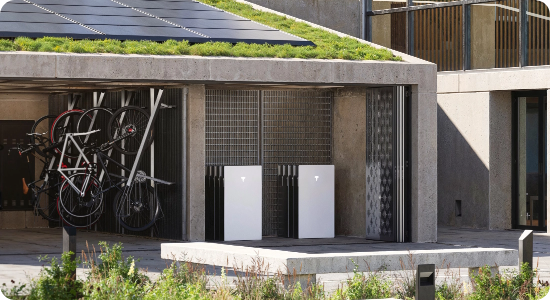
The Tesla Powerwall 3 stores 13.5 kWh of energy with a built-in DC-coupled inverter, covering typical evening consumption for most households. Up to three Expansion Packs can be added for larger properties or higher storage requirements.
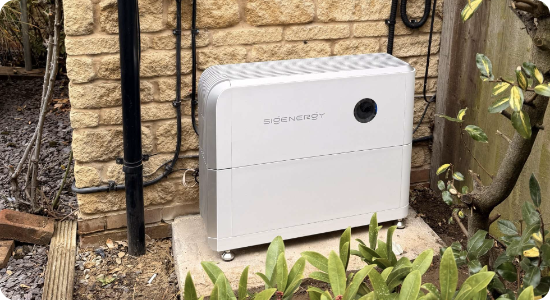
The SigenStor Storage Battery offers a modular design, meaning the battery can be tailored to the size of your property, and energy habits.
In most cases, residential ground mounted solar panels are covered by Permitted Development rights in England and Wales, meaning planning permission is not required — provided the installation meets the following standard conditions.
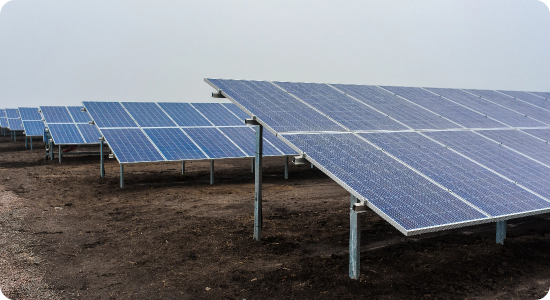
For larger commercial and agricultural systems, or for properties in designated areas, full planning permission is typically required. Planning rules for systems above 1MW differ from residential permitted development criteria. Local authority policies also vary, and pre-application advice from your local planning authority is advisable for any non-standard installation.
If you are unsure whether your planned installation requires planning permission, our team will advise during your free survey. We handle the planning process for installations where consent is required.
Ground mounted solar installations require more planning, groundwork, and electrical routing than a standard roof install. The quality of design and installation matters considerably more when you are putting a frame into the ground and trenching cable across a property or field.

Bespoke Design for Every Site
We design every ground mount system from scratch. Site orientation, terrain, land boundaries, cable run distances, and the property’s energy profile all feed into the system design. We do not offer standard packages for ground mounted solar — because no two sites are the same.

In-House Engineers with 10+ Years’ Experience
All installations are carried out by our own in-house MCS certified engineers. Several members of our team have more than 10 years of individual installation experience. We do not use sub-contractors.

MCS Certified — SEG Eligible
Every ground mounted system we install is MCS certified, making it eligible for the Smart Export Guarantee from day one. We handle the MCS certification and SEG registration paperwork.
Premium Equipment Only
We install premium panels from SunPower Elite and Viridian Solar, inverters from SolarEdge, and battery storage from Tesla Energy (Powerwall) and Sigenergy. We do not use budget equipment on ground mounted systems — the same premium-only approach applies regardless of installation type.

15 Years’ Experience. 3,000+ Installations. 4.9 Stars.
Founded in 2010. Over 3,000 residential and commercial installations. 4.9-star Google rating from 345 reviews. RECC registered for independent consumer dispute resolution.
Our premium panel partnerships allow us to offer manufacturer warranties that go beyond what is available from standard-grade suppliers. Here is what is covered and how to verify it.
Customers with premium solar PV systems typically reduce their electricity bills by 80–98%, depending on system size, household consumption, and energy tariff. This figure is based on our analysis of installations across Warwickshire and the West Midlands over 15 years of operation.
Through our premium supplier partnerships, we can offer manufacturer performance warranties of up to 25 years on solar panels, with some supplier programmes extending coverage further. Our own 5-year workmanship warranty covers every installation.
Ground mounted solar installation is a more involved process than a roof install. Here is what the process looks like from first contact through to commissioning.
1.
One of our MCS certified engineers visits your property, assesses the available land, measures orientation and shading, and designs a bespoke system layout. We advise on planning permission requirements and confirm whether your site is Permitted Development or requires a planning application.
2.
We provide a detailed, no-obligation proposal covering the system specification, mounting structure, cable routing plan, installation costs, and projected annual savings. The quotation is valid for 30 days. A 14-day cooling-off period applies under the Consumer Contracts Regulations 2013.
3.
Our engineers install the ground anchors or concrete footings, assemble the mounting frame, and carry out any required cable trenching. We work to minimise disruption to the surrounding land and restore it on completion.
4.
Panels are mounted to the frame, connected in the correct string configuration, and cabled back to the inverter. All electrical work is carried out to NICEIC standards.
5.
We commission the system, test all connections, and confirm correct operation and output. We provide MCS certification, warranty documentation, and SEG registration. We walk you through the monitoring app before we leave.
These are the questions we are asked most often about ground mounted solar. Call us on 01789 262 411 if your question is not listed here.
Yes. Ground mounted solar panels are a well-established alternative to roof-mounted systems. They are installed on frames set into the ground and can be positioned and angled for optimal solar yield regardless of the property’s roof orientation. We install ground mounted systems for homeowners, farmers, and commercial businesses across the Midlands.
A rough guide is that each panel requires approximately 1.6 square metres of ground space, plus spacing between rows to avoid self-shading. A typical 10-panel residential system requires around 20–25 square metres of usable land. We calculate the exact space requirement based on your system size and site during the free survey.
In most cases, residential ground mounted solar panels are covered by Permitted Development rights in England and Wales — no planning permission required. Conditions apply: panels must not exceed 4 metres in height, must not face a highway, and the property must not be listed or in a designated area. For commercial and agricultural systems, or properties in conservation areas, planning permission is usually required. We advise on planning requirements during your free survey. See the full planning section above.
They can be. Because the mounting angle and direction are not constrained by an existing roof, a ground mount can be set to the theoretically optimal angle for UK latitudes (typically 30–45 degrees, facing due south). On properties where the roof faces east-west or carries shading, a ground mount can generate substantially more electricity per panel than the equivalent roof installation.
Ground mounted solar panels typically cost more than roof-mounted systems due to the mounting frame, groundwork, and additional installation requirements. However, they offer greater flexibility in panel positioning and are often ideal for properties with limited roof space or shading issues. Costs vary depending on system size, access, and site conditions, but most residential systems range from £8,000–£18,000+. Contact our team for a free survey and tailored quotation.
Yes — ground mounted solar is one of the most cost-effective energy investments for farms and rural properties. Open south-facing land, combined with high agricultural energy costs, often makes the financial case for a ground array very strong. We install ground mounted systems for farms, equestrian properties, and rural businesses across the Midlands. Ask about our agricultural survey service.
Yes. We pair ground mounted solar with Tesla Powerwall 3 and Sigenergy battery systems. Battery storage captures surplus solar generation for use in the evening or overnight, significantly increasing self-consumption. For agricultural and commercial sites, battery storage can also provide grid independence during peak tariff periods. We install combined solar and storage as a single integrated project.
Static mounts hold panels at a fixed angle — simple, reliable, and lower cost. Sun-tracking mounts use motors to follow the sun’s position throughout the day, increasing generation per panel but at significantly higher cost and maintenance requirement. For most residential and small commercial installations, a well-positioned static mount delivers strong performance at a more cost-effective price point. We install both types and will advise on the right choice for your site.
Premium solar panels are warranted for 25 years and typically continue generating beyond that. Our own 5-year workmanship warranty covers the installation. Mounting frames are built from galvanised or powder-coated steel or aluminium, designed for long-term outdoor exposure. With appropriate maintenance, a ground mounted system should deliver reliable generation for 25–30 years.
Ground mounted panels require minimal maintenance. Because they are accessible from the ground, cleaning is straightforward — we recommend a wash with clean water once or twice a year. Annual monitoring via the inverter app or display confirms output is consistent. A professional inspection every 3–5 years is recommended to check frame condition, connections, and inverter performance. Our team can arrange ongoing maintenance — ask about aftercare when you book your installation.
Speak to Georgia or Andy — our Sales Managers will assess your site, review your energy requirements, and recommend the right ground mount system for your property or land. There is no obligation and no hard sell.
Call 01789 262 411, email pv@stratfordenergy.co.uk, or complete the contact form. Quotations are valid for 45 days. A 14-day cooling-off period applies on all residential contracts.