
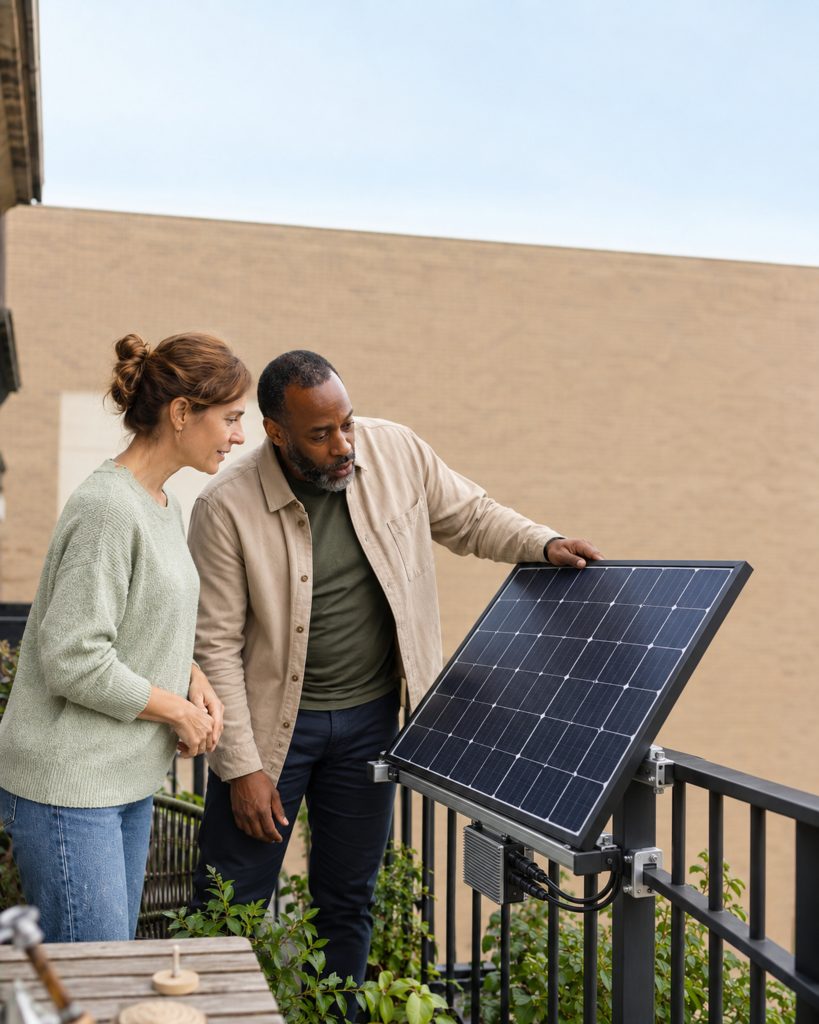
How Do Plug-in Solar Panels Work in the UK?
Plug-in solar panels are small solar PV systems designed to feed electricity into a home's electrical system through a standard household socket.
They offer a way to generate a modest amount of solar electricity without installing a conventional rooftop solar array. For some households, especially those that cannot fit rooftop panels, that could make them a practical option.
This article describes a rule change dated 27 August 2026 for England, Scotland and Wales. Northern Ireland is not covered by that change.
Current compliant plug-in solar kits in Great Britain are capped at 800W. That means they serve a different purpose from rooftop solar systems, which are typically much larger to provide households with greater generation capacity, battery storage or a system designed around future electricity use.
What are plug-in solar panels?
A typical plug-in solar panel system combines one or more solar panels with a microinverter. The panels generate direct current, or DC, electricity. The microinverter converts this into alternating current, or AC, which can be used by household appliances.
You may also see these products described as balcony solar. A balcony is only one possible location. Depending on the product, property and permissions involved, panels may be positioned in other suitable outdoor areas where they can receive sunlight and be mounted correctly.
How do plug-in solar panels work?
The process works in four stages:
- Solar cells in the panel generate DC electricity when exposed to sunlight.
- A microinverter converts the DC electricity into AC electricity.
- The AC electricity passes through the plug connection into the home's electrical system.
- Household appliances use the available solar power. If demand is higher than the solar output, the grid supplies the balance.
If the system produces more electricity than your home is using at that moment, surplus electricity can flow to the grid.
The photovoltaic process itself is the same principle used by rooftop solar panels. The main differences are the smaller scale and the way the system connects to the property.
This is why daytime electricity use matters. If your home is using electricity while the panels are generating it, more of that electricity can be consumed directly.
Are plug-in solar panels legal in the UK?
Yes. Since 27 August 2026, qualifying plug-in solar systems have been permitted in Great Britain, subject to meeting the relevant requirements. Buying a solar panel and plugging it into a socket without checking compliance is not enough.
Northern Ireland was not covered by the same rule change, so the position there should be checked separately.
Before using a plug-in solar system, check that the product appears on the approved product register and complete the required registration process.
Your property can also affect what you are allowed to install. Renters and some flat owners may need permission from a landlord or freeholder. Planning requirements can also apply depending on the property, location and mounting arrangement.
In England, the amended permitted development provisions for plug-in solar also contain conditions relating to how and where equipment is mounted, including restrictions concerning timber surfaces.
Because these rules are new, it is important to check the latest government and Energy Saving Trust guidance before buying or installing a system.
Are plug-in solar panels safe?
Plug-in solar panels can operate safely when you use an approved product, follow the manufacturer's instructions and install the equipment correctly.
Government testing helped shape the safety requirements for plug-in solar systems in England. However, choosing the right product is only part of the process. Panels must be securely mounted in a suitable location, and your home's electrical system must be able to support the equipment.
If you live in an older property or are unsure about the condition of your wiring, speak to a qualified electrician before installing a system.
It’s important to note, not all plug-in solar products sold online meet UK requirements. Government consultation feedback raised concerns about non-compliant equipment being sold through online marketplaces. Always check that a product is approved and follow the manufacturer's installation instructions.
How much electricity can plug-in solar generate?
Energy Saving Trust estimates that an 800W system could generate around 700 kWh of electricity a year under the conditions used in its research.
That figure is an estimate rather than a guaranteed annual yield. Generation will vary according to factors such as location, panel orientation, shading and the amount of sunlight the system receives.
By comparison, a typical domestic rooftop solar installation has a much larger generating capacity. Actual annual generation depends on the system size, location and installation conditions.
How much could plug-in solar save?
Energy Saving Trust estimates annual savings of around £70 for a household that is out during much of the day and around £100 for a household that is at home and able to use more of the electricity as it is generated.
Its modelling is based on an 800W system in Manchester, facing south at a 30-degree angle with no shading, household electricity consumption of 2,500 kWh a year and an electricity price of 24.7p per kWh.
Your results will depend on the location and position of the panels, how much electricity your household uses, when you use it and the electricity price you pay.
Will I receive payment if my plug-in solar generates electricity I don’t use?
Possibly, but payments are not automatic. Surplus electricity can flow back to the grid, but you will only be paid if you have an export tariff that accepts your plug-in solar system.
Some suppliers offer this option under specific conditions. At the time of writing, Octopus offers export payments to customers who buy its plug-in solar kit and also use it as their electricity supplier. A working smart meter and completion of the required network registration and approval process are needed.
Do not assume that any plug-in kit will qualify. Before buying, check whether a supplier will accept your chosen system and what requirements apply.
When estimating savings, focus first on the electricity you can use at home as it is generated. Include income from surplus electricity only once you have confirmed access to a suitable export tariff.
Who are plug-in solar panels good for?
Plug-in solar may suit you if you:
- Cannot install a conventional rooftop solar system.
- Plan to move home soon or regularly, and want to take the equipment with you.
- Use a reasonable amount of electricity during daylight hours.
- Have a sunny and suitable outdoor location.
For these reasons it is often considered by renters and flat owners, although landlord or freeholder permission may be required.
What are the limits of plug-in solar?
The biggest limitation of plug-in solar is the amount of electricity it can generate. High-energy appliances, such as washing machines, dishwashers and ovens, may still need electricity from the grid, even when the panels are producing power.
Battery storage is another limitation. Current regulations do not cover plug-in solar systems with integrated batteries, so you cannot store excess electricity within these systems for use later in the evening.
Plug-in solar panels also switch off during a power cut, meaning they cannot provide backup electricity when the grid goes down.
Your property's suitability matters too. Shading, panel positioning, available outdoor space and mounting requirements can all affect how well the system works. You may also need permission from your landlord or freeholder before installing panels.
Plug-in solar vs rooftop solar: what is the difference?
Both plug-in and rooftop solar panels generate electricity from sunlight, but rooftop solar offers greater potential savings for most families with suitable homes. Its higher generation capacity means it can cover a much larger share of household electricity use, reducing the amount of power bought from the grid.
Plug-in solar systems in Great Britain are currently capped at 800W. By comparison, Energy Saving Trust uses around 4.5kWp as the reference size for an average domestic rooftop solar installation. That's more than five times the generating capacity, although actual electricity production depends on the installation and conditions.
Plug-in solar
Plug-in solar can be an appropriate alternative option for households for whom a permanent rooftop system isn’t appropriate but who still want to generate a small amount of electricity.
Its main features include:
- A maximum compliant output of 800W.
- Connection through a household socket.
- Portable equipment that may be suitable for renters.
- Modest electricity generation, mainly benefiting daytime use.
- No integrated battery storage under current regulations.
While plug-in solar can reduce electricity bills, its smaller capacity restricts how much a household can save.
Rooftop solar
For homeowners with a suitable roof, professionally installed rooftop solar is generally the better option for reducing household electricity bills over the long term.
A larger system can generate substantially more electricity, helping to power everyday appliances and reduce reliance on the grid.
Key benefits include:
- Greater potential savings: Higher electricity generation can offset more of a family's annual electricity consumption.
- Battery storage: Excess daytime electricity can be stored for use in the evening, reducing grid imports when solar panels are no longer generating.
- EV charging: Solar electricity can help reduce the cost of charging an electric vehicle at home.
- Designed for your household: Panel capacity, positioning and battery storage can be planned around your property's electricity use.
- Long-term flexibility: The system can be designed with future needs in mind, including electric heating or increased household electricity demand.
Although rooftop solar requires a higher initial investment, its greater generating capacity and compatibility with battery storage give most families with suitable properties more opportunity to reduce their electricity bills.
For homeowners planning to stay in their property, rooftop solar is often the stronger long-term investment, particularly when the system is designed around how and when the household uses electricity.
What does battery storage change?
Battery storage allows solar electricity to be used at a different time from when it is generated.
A home may generate more electricity around the middle of the day but use more power later in the afternoon or evening. A battery can store some excess rooftop generation so that it can be used after solar production has fallen.
Energy Saving Trust also notes that batteries can be charged during lower-tariff periods where the battery configuration and electricity tariff allow it.
Future electricity use can also be considered at the design stage. A household expecting to add an electric vehicle or electric heating may have very different future electricity requirements from its current demand.
Battery backup during a power cut should not be assumed. Whether a battery can supply electricity during an outage depends on the product, installation and system configuration.
Are plug-in solar panels worth it?
Plug-in solar may be worth considering if you cannot install rooftop panels, value portability, or want modest electricity generation at a lower initial cost.
If you own your home and want solar generation planned around higher electricity use, battery storage or an EV, a professionally designed rooftop system may be more suitable.
Consider:
- Whether you own or rent.
- Whether your roof is suitable.
- How much electricity you use.
- When you use electricity.
- Whether your electricity demand may rise.
- Whether you want battery storage.
Plug-in solar FAQs
Do I have to register plug-in solar?
Yes. A compliant plug-in solar device must be registered before use.
Check the current official guidance and approved product information before buying or connecting a system.
Can renters install plug-in solar?
Potentially. If you are renting, you will need a suitable location and may require permission from your landlord. Flat owners may also need approval from a freeholder or another responsible party.
Do I need planning permission for plug-in solar panels?
Planning requirements depend on the property, location and way the equipment is mounted. Some installations may be covered by permitted development provisions, but conditions apply.
Check the current rules for your property before installation rather than assuming that planning permission is never required.
Want to Make Bigger Savings with Rooftop Solar?
Plug-in solar panels offer a small reduction in electricity bills, but if you own your home and want to make a bigger difference to your energy costs, professionally installed rooftop solar is the smarter long-term option.
At Stratford Energy Solutions, we specialise in designing and installing rooftop solar PV systems tailored to your home and electricity needs. With the option to add battery storage and EV charging, you can generate more of your own electricity, reduce your reliance on the grid and maximise your potential savings.
Our experienced team can help you explore the right solar solution for your property, whether you're looking to cut household bills now or prepare for your family's future energy needs.
Ready to find out what rooftop solar could save you? Contact one of our Renewable Energy Experts for a personalised quote.