
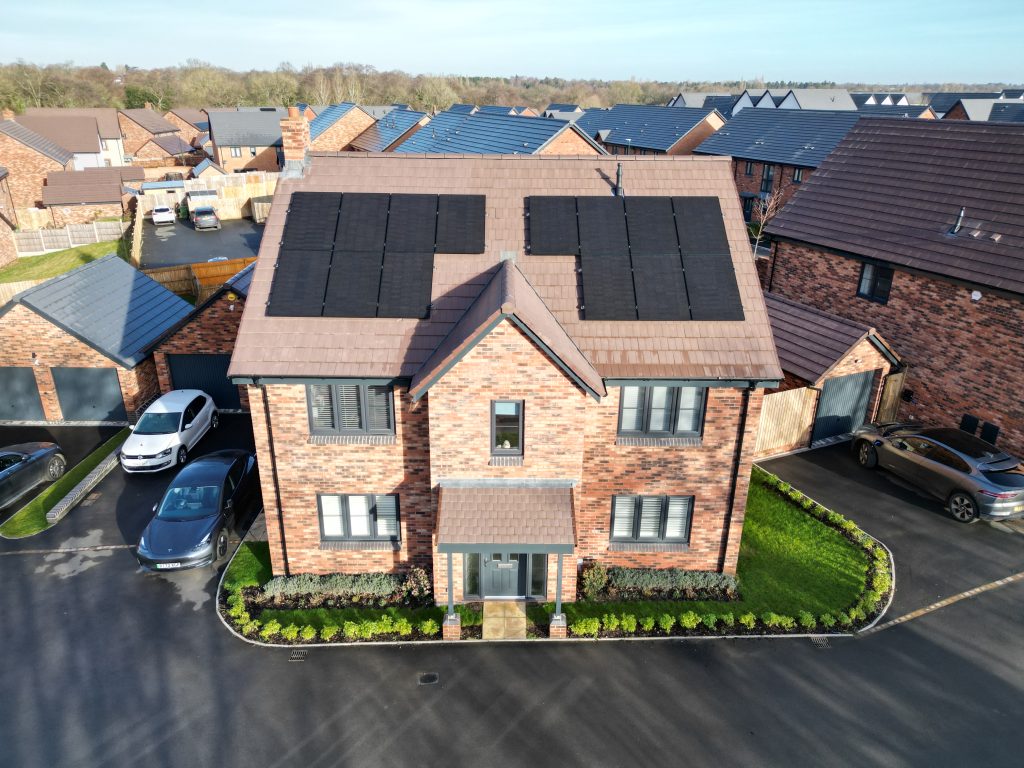
How Much Do Solar Panels Cost in the UK?
Average Solar Panel Costs
The average cost of solar panel installation in the UK sits between £5,000 and £9,000 for a standard 3kW to 5kW domestic system. Larger systems with higher output can reach £10,000 to £13,000 or more. Here is a general breakdown:
| KWH | Technology | Property Type | Estimated Costs |
| 3 kWh | 6-8 Panels | 2-3 Bedroom House | £5000 to £6000 |
| 4-5 kWh | 8-12 Panels | 3-4 Bedroom House | £6,200 to £7,200 |
| 4-5 kWh | 12-16 | 5 Bedroom House | £6,800 to £7,800 |
| 6-10 kWh | 16-20 | 5+ Bedroom House | £8,200 to £9,200 |
These are ballpark figures. The actual solar panel installation cost for your home will shift depending on the specifics of your property, your chosen equipment, and your installer.
Installation costs vary by system size, so a larger system typically costs more upfront but also generates more electricity and cuts more from your bills over time.
What You Get for the Price
A full solar panel system is not just the panels themselves. A typical installation quote covers:
- Solar panels — the photovoltaic (PV) panels mounted on your roof
- Inverter — converts the DC electricity generated by the panels into AC electricity your home can use
- Mounting system and cabling — the hardware and wiring that secure and connect everything
- Labour — installation by a qualified MCS-certified engineer
- Commissioning and testing — confirming the system is generating correctly before sign-off
- Monitoring equipment — many modern systems include an app or display so you can track energy output in real time
What you are paying for is not just hardware. You are paying for the design of a system suited to your property, a professional installation, and the assurance that the work is covered by warranties and signed off to industry standards.
Think of solar installation as a long-term investment rather than an upfront expense. The initial cost is offset by years of reduced electricity bills, and in most cases, the system pays for itself within seven to eleven years.
Factors That Affect Solar Panel Installation Cost
System Size and Energy Needs
System size is one of the biggest cost drivers. Solar systems are rated in kilowatts (kW), and a larger system costs more because it uses more panels and produces more electricity. The right system size depends on how much electricity your household uses.
A typical UK home uses around 3,500 kWh of electricity per year. A 4kW system in a reasonably sunny location can generate roughly 3,400 to 3,800 kWh annually, which covers close to your full demand. If you have an electric vehicle, a hot tub, a home office running all day, or you are planning to add battery storage, your energy needs will be higher and a larger system may make more sense from the start.
Systems generate renewable electricity whenever daylight is available, not just in direct sunlight. Output is higher in summer and lower in winter, but a well-sized system contributes to your energy costs year-round.
Roof Type, Location, and Complexity
Your roof plays a significant role in determining installation complexity and cost.
Orientation and pitch affect how much energy your panels produce. A south-facing roof at a 30 to 45 degree pitch gives the best output. East or west-facing roofs can still work well, typically producing around 80% to 90% of the output of a south-facing installation. North-facing roofs are generally not recommended for solar.
Roof material affects the mounting process. Concrete tiles, clay tiles, and flat roofs all require different fixing methods, and some older roof types may need additional structural work before panels can be installed safely.
Access and scaffolding will factor into the labour cost. A straightforward single-storey or low-pitch roof is quicker to work on than a steep, high, or awkwardly shaped property.
Multiple roof planes or shading from chimneys, dormers, or nearby trees can complicate the design and sometimes require additional components like micro-inverters or optimisers, which add cost but improve performance.
Solar Panels and Battery Storage Costs
Do You Need a Battery?
Battery storage is optional, but it can significantly increase the value of a solar installation depending on how you use electricity at home.
Solar panels generate electricity during daylight hours. Without storage, any electricity you do not use at the moment it is generated either goes back to the grid or is simply lost to you. A battery stores that surplus energy so you can use it in the evening, overnight, or on cloudy days.
Battery storage increases the total cost of your system, but it also increases the amount of your own solar electricity you actually consume, which is where the savings really come from. If you are out during the day and use most of your electricity in the evening, a battery makes particular sense.
Cost of Solar Panels with Battery UK
Adding battery storage to a domestic solar installation typically adds £2,000 to £5,000 to the overall cost, depending on battery capacity. Battery cost alone is usually from £5,000. A combined solar and battery system for a typical home in the UK generally costs between £8,000 and £15,000.
|
KWH |
Technology |
Property Type |
Estimated Costs |
|
3 kWh |
6-8 Panels + Storage Battery |
1-2 Bedroom House |
From £10,300 |
|
4-5 kWh |
8-12 Panels + Storage Battery |
3-4 Bedroom House |
From £13,600 |
|
4-5 kWh |
12-16 Panels + Storage Battery |
5 Bedroom House |
From £14,200 |
|
6-10 kWh |
16-20 Panels + Storage Battery |
5+ Bedroom House |
From £15,500 |
Battery capacity is measured in kilowatt-hours (kWh). A 5kWh battery will typically cover evening electricity usage for an average home. A 10kWh battery gives you more resilience and is better suited to homes with higher demand or those wanting maximum grid independence.
The inverter in a battery system is a hybrid unit that manages both the panels and the battery. This is factored into the system cost.
Upfront, a battery adds to the investment. Over time, it lowers your electricity bills further by reducing the amount you draw from the grid, and that long-term saving is what justifies the additional outlay for many homeowners.
Savings, Payback Period, and ROI
How Much Can You Save?
Solar panels reduce electricity bills by allowing you to generate your own power rather than buying it all from the grid. The more of your own electricity you use, the more you save.
A typical 4kW system on a south-facing roof in the UK generates around 3,400 kWh per year. With electricity prices at around 24p to 28p per unit (which continue to fluctuate), that represents a potential saving of £800 to £950 per year if you use the majority of what you generate.
In practice, without a battery, most households self-consume around 30% to 50% of the electricity their panels produce during the day. The rest is exported to the grid. With a battery, self-consumption typically rises to 70% to 90%, which is where savings accumulate fastest.
You can also earn money by exporting surplus electricity through the Smart Export Guarantee (SEG), which pays you a per-unit rate for electricity you send back to the grid. Rates vary by energy supplier, generally ranging from 1p to 15p per kWh.
Solar panels provide long-term savings that grow over time, particularly as grid electricity prices rise.
Payback Period and Return on Investment
The average payback period for a domestic solar installation in the UK is between seven and eleven years, depending on system size, self-consumption rate, local solar irradiance, and electricity prices.
After payback, the system continues generating free electricity for the remaining life of the panels, which is typically 25 to 30 years. The return on investment over a full system lifetime is often well over double the original cost.
Here is a simplified example:
- System cost: £7,500 (4kW, no battery)
- Annual savings: £900 (based on 50% self-consumption at 25p/kWh + SEG earnings)
- Payback period: approximately 8 to 9 years
- Remaining years generating savings: 16 to 20+ years
- Estimated lifetime savings: £15,000 to £20,000+
Adding a battery improves these figures by increasing self-consumption. Savings accumulate faster, and the payback period shortens over time as electricity prices rise.
Grants, Incentives, and Financing Options
UK Grants and Incentives
Government incentives reduce upfront costs for eligible households, and it is worth checking what is available before committing to a purchase.
Smart Export Guarantee (SEG) is the main ongoing incentive for solar owners. Once your system is installed and MCS-certified, you can register with a licensed energy supplier to receive payment for every unit of electricity you export to the grid. It does not reduce your installation cost directly, but it contributes to your return over time.
ECO4 Scheme is a government-backed programme for low-income households. It funds energy efficiency improvements including, in some cases, solar panels, for eligible properties. Eligibility is based on income and property energy rating.
Great British Insulation Scheme focuses primarily on insulation but sits within the broader push for energy efficiency improvements that can accompany solar.
Local authority schemes vary by region. Some councils in the Midlands and across the UK offer additional support, particularly for social housing and community energy projects. It is worth checking with your local authority.
If you are a landlord or business owner, there are separate tax advantages and capital allowances worth discussing with a tax adviser.
Ways to Finance Solar Panels
Not every homeowner wants to pay the full cost upfront, and there are several ways to spread the investment:
- Upfront payment gives you the best long-term return because you avoid interest charges and own the system outright from day one
- Finance plans are offered by many installers, including 0% or low-interest options for qualifying customers, allowing you to spread the cost over two to five years
- Personal loans from banks or credit unions can be used to fund a solar installation if you prefer to arrange finance independently
- Green finance products are offered by some lenders specifically for renewable energy upgrades, sometimes at preferential rates
The best approach depends on your financial position. Pay upfront if you can and the maths is straightforward. If you prefer to spread the cost, compare the total repayment figure against the projected annual savings to make sure the numbers still work in your favour.
Are Solar Panels Worth the Cost?
Pros and Cons of Solar Investment
Solar panels reduce electricity bills immediately from the date of installation. For most UK homeowners, the financial case is strong, particularly with electricity prices at their current level.
The case for:
- Generate your own electricity and cut what you buy from the grid
- Protect yourself against future electricity price rises
- Earn export payments through the Smart Export Guarantee
- Add value to your property
- Reduce your carbon footprint meaningfully
- Systems last 25 to 30 years with minimal maintenance
The honest considerations:
- The upfront investment is significant
- Output is weather-dependent and seasonal
- Savings are greater for those who are home during the day, or who add battery storage
- Returns vary based on roof orientation and local solar conditions
For most homeowners in the UK, especially those who intend to stay in their property for ten or more years, solar panels are a cost-effective, long-term investment. The renewable, sustainable nature of the technology means the value compounds over time.
Who Should Consider Solar Panels?
Solar panels are worth considering for a wide range of property owners, though the strongest case applies in specific situations.
Homeowners with a south or south-west facing roof, a reasonable energy bill, and a plan to stay in the property for at least a decade are in the best position. The longer you own the system, the more you benefit from years of savings after payback.
Landlords can benefit from improved EPC ratings, which are increasingly important for both lettability and legal compliance. Solar panels can help bring older properties up to the minimum efficiency standards being introduced in future legislation.
Business owners with commercial properties typically have higher daytime energy consumption, which makes solar particularly effective. The proportion of generated electricity that is self-consumed is naturally higher, savings accumulate faster, and there are capital allowance benefits available. Homeowners compare quotes from suppliers before committing, and the same logic applies to commercial buyers.
Eco-conscious households who want to reduce their reliance on grid electricity and lower their carbon output will find that solar delivers both, without sacrificing comfort.
How to Get an Accurate Solar Panel Quote
Comparing Suppliers and Installers
Getting multiple quotes is the most important step before committing to a solar installation. Prices vary between installers, and so does the quality of the equipment and workmanship.
When comparing, make sure each quote covers the same system specification so you are comparing like for like. A cheaper quote that uses lower-efficiency panels or a less capable inverter may cost you more in lost output over the life of the system.
Check that any installer you consider is MCS-certified (Microgeneration Certification Scheme). MCS certification is a requirement for claiming Smart Export Guarantee payments, and it demonstrates that the installer meets the standards expected for domestic solar installations. Without it, you lose access to government incentives.
Ask how long the installer has been operating, how many systems they have installed, and whether they offer aftercare or monitoring support once your system is live.
At Stratford Energy Solutions, we have completed over 3,000 installations since 2010 and design every system around the specifics of your property, not a one-size template.
What to Check Before Installation
Before work begins, a reputable installer should carry out a thorough assessment of your property. Here is what the process should cover:
- Roof suitability — structural condition, available area, pitch, and orientation
- Shading analysis — checking for obstructions that could reduce output throughout the day
- System size — matched to your actual energy consumption, not just a standard package
- Panel efficiency — higher efficiency panels cost more but produce more electricity from the same roof area
- Inverter type — standard string inverter, micro-inverters, or DC optimisers each suit different roof configurations
- Energy output estimate — a projected annual generation figure based on your location and roof
- Warranty terms — most quality panels carry a 25-year performance warranty; inverters typically carry 10 to 12 years
Getting this information before you commit gives you a clear basis for comparison and helps you make a confident decision about which installer and system is right for your home.
Solar panel costs in the UK are a real investment, but the numbers work for most homeowners who approach it with the right information. The key is matching the system to your property and usage from the start, rather than picking a package based on price alone.
If you want to know what a system would cost for your specific home, speak to one of our energy consultants. We will design a system around your property and give you a clear, honest quote with no pressure.