
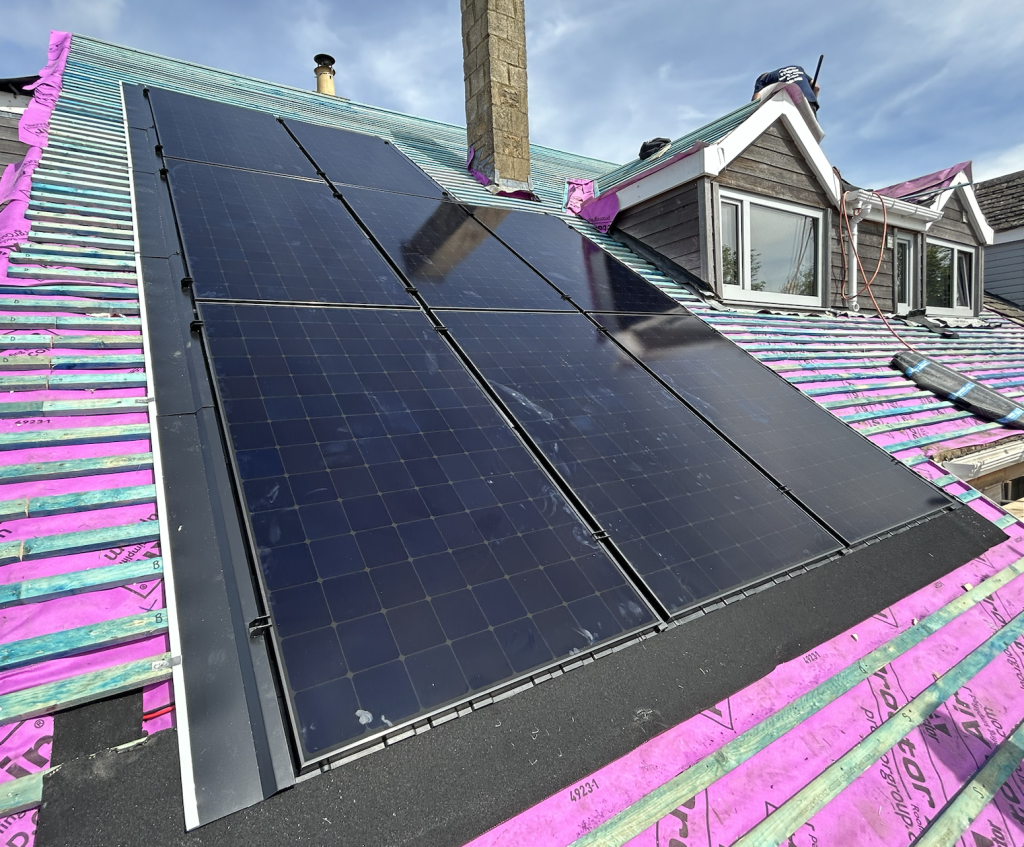
Most solar panel installations in the UK are covered by permitted development rights, so you often will not need planning permission, but every system still has to meet Building Regulations and electrical safety standards. This guide explains which rules apply, when you need extra permissions, why MCS certification matters, and how the grid connection and export payment process works, so you know exactly what a compliant installation looks like. (The detailed limits below are those for England; Scotland, Wales and Northern Ireland set broadly similar rules with some differences, so check locally if you are outside England.)
Solar Panel Installation Regulations Explained
Solar panel installations in the UK are governed by two separate sets of rules: planning rules, which decide whether you can put panels up, and Building Regulations, which decide that the work is safe and sound. Most home systems clear both without much fuss, but it helps to understand where each one applies.
Do Solar Panels Need Building Regulations?
Solar panel installations must comply with Building Regulations, even when planning permission is not required. The regulations make sure your roof can carry the extra weight, that the electrical work is safe, and that any fire risks are handled properly. An MCS-certified installer signs off that these standards are met.
Building Regulations are not the same as planning permission, and people mix the two up all the time. Planning permission is about whether you are allowed to install panels in the first place, taking account of how they look and where they sit. Building Regulations are about whether the installation itself is safe and structurally sound. You can be free from planning permission and still need to satisfy Building Regulations, which almost every install does.
Planning Permission vs Permitted Development
Most domestic solar panels fall under permitted development rights, which means you can install them without a full planning application. Under these rights, roof-mounted panels are generally fine as long as they do not stick out more than 200mm from the roof surface, do not rise above the highest part of the roof (chimneys aside), and are sited to keep their visual impact as low as reasonably possible. On a flat roof the equivalent limit is that the equipment’s highest point stays no more than 600mm above the roof.
Planning permission is required in certain cases, though. If your panels would break those size or projection limits, sit on a wall facing a road in a sensitive area, or go on a ground-mounted array above the permitted size (broadly under 4 metres tall, no bigger than 9 square metres, and at least 5 metres from a boundary), you may need to apply. Only the first standalone array counts as permitted development — a second one needs a planning application. A quick check with your local planning authority before you commit is worth the time.
When Additional Permissions Apply
Extra permissions apply mainly to listed buildings, conservation areas and national parks. Listed buildings often require planning permission, plus listed building consent, because any change to the fabric of a protected building is assessed carefully. Panels are not banned, but you will usually need approval, and sometimes a discreet placement out of public view.
Conservation areas may have additional restrictions. In a conservation area or an Area of Outstanding Natural Beauty, panels on a wall or roof facing a highway can need permission even where they would be permitted elsewhere. National parks follow similar logic. The rules vary between councils, so if your home sits in any protected setting, check with the local authority before booking an install.
Building Regulations and Electrical Compliance
Building Regulations cover two big areas for solar: the structure holding the panels up, and the electrical work connecting them in. Getting both right is what keeps a system safe for its whole life.
Structural and Fire Safety Requirements
Building Regulations keep the structure safe by requiring that your roof can take the added load of the panels and mounting system. A good installer checks the roof’s condition and structure before fitting anything, and where there is doubt a structural survey settles it. An old or weak roof may need attention first.
Roof condition affects installation suitability more than many people expect. Fire safety is part of the assessment too, covering how the array and its wiring are fitted so they do not create a hazard. These checks are routine for a certified installer, and they are the reason you should never let unqualified fitters bolt panels onto a roof without a proper look first.
Part P and BS 7671
Part P covers electrical safety in dwellings, and it applies to the wiring that ties your solar system into your home. It exists so that electrical work in dwellings is designed and installed to avoid fire and shock risks. Solar installs fall squarely within its scope.
BS 7671 sets the electrical wiring standards, and it is the standard your installer works to. Also known as the IET Wiring Regulations (currently the 18th Edition), it governs how the consumer unit, cables, inverter and protective devices are specified and connected. Between Part P and BS 7671, the electrical side of a solar installation has to meet the same rigorous bar as any other serious electrical work in your home.
Battery Storage Regulations
Battery storage brings its own safety requirements, on top of the panel rules. A home battery has to be installed in a suitable, well-ventilated location, wired correctly, and matched to the rest of the photovoltaic (PV) system. The installer checks that the battery, inverter and panels all work together safely.
Fitting a battery alongside panels sometimes calls for additional electrical work, such as changes to the consumer unit or extra protection. If you are adding a battery to an existing solar system rather than installing both together, the installer will assess what upgrades are needed to keep the whole setup compliant.
MCS Certification and Installer Requirements
MCS certification sits at the centre of a compliant solar installation. It is the quality mark that unlocks export payments and warranty protection, and it tells you your installer works to a recognised standard.
Why MCS Certification Matters
MCS certification is a quality standard for renewable installations and the companies that fit them. MCS-certified installers meet recognised industry standards, and their work is checked to make sure it is safe and performs as promised. Choosing a certified installer is the simplest way to know your system is fitted properly.
The benefits go beyond peace of mind. MCS certification is required to claim payments under the Smart Export Guarantee, so without it you cannot get paid for the electricity you export. It also protects your product warranties, since many manufacturers only honour their cover when the panels are installed by a certified professional. As an MCS-certified company, we make sure every install we complete keeps those benefits intact.
Choosing a Qualified Installer
A qualified installer holds the right accreditations and follows professional installation standards. Beyond MCS, look for signs of a serious company: recognised trade accreditations, proper insurance, and a track record you can check. Professional installation keeps you compliant with the rules, because a certified installer knows the planning, Building Regulations and grid rules inside out.
Verifying an installer’s credentials is straightforward. Ask for their MCS number, check their reviews, and confirm they carry insurance. A good installer will happily show all of this. We hold MCS certification along with TrustMark, RECC and NICEIC accreditations, and we are glad to talk any homeowner through what each one means.
Warranties and Insurance
Compliance supports warranty protection in a direct way. When your system is installed by a certified professional and signed off correctly, your manufacturer warranties stay valid and your workmanship is covered. A non-compliant install can void the very warranties you are relying on.
Insurance is worth a thought too, for both homes and businesses. It is sensible to let your home insurer know about a solar and battery system, and commercial installations often have their own cover requirements. Keeping your documentation in order after installation, from the MCS certificate to the electrical sign-off, makes any future claim or warranty issue far easier to handle.
Grid Connection, DNO Approval and Export Payments
Connecting solar to the grid follows a clear process, and the paperwork decides both whether you can connect and whether you get paid for surplus power. Understanding G98, G99, DNO approval and the Smart Export Guarantee takes the mystery out of it.
G98 and G99 Explained
G98 and G99 are the standards that govern how a solar system connects to the electricity network. G98 applies to smaller generating systems, broadly those up to 3.68kW per phase (around 16 amps). Under G98, the installer can connect the system and then simply notify the network operator — typically within 28 days of commissioning — which covers most modest home installs.
G99 applies to larger generating systems, above the G98 threshold. For a G99 connection, approval has to be obtained from the network operator before the system is switched on, not after. Many larger home systems, and most with sizeable batteries, fall under G99. Your installer works out which applies and handles the application as part of the job.
Distribution Network Operator (DNO) Approval
DNO approval may be required before grid connection, and this is the step G99 triggers. The Distribution Network Operator is the company that runs the local electricity network in your area. For larger systems, they need to approve the connection first to make sure the local grid can handle the extra power being fed in.
The notification and approval process is usually managed by your installer. For a smaller G98 system, it is a straightforward notification after installation. For a G99 system, the application goes in beforehand and can take a few weeks for a decision. Either way, this is how your installation links safely into the wider electricity network, so it is worth building the timing into your plans.
Smart Export Guarantee (SEG)
The Smart Export Guarantee pays for exported electricity, meaning you earn money for the surplus power your panels send back to the grid. Regulated by Ofgem, it requires licensed suppliers to run their own SEG tariffs, and rates vary enormously between them — a Which? comparison found export rates ranging from around 1p to 25p per kWh, so it genuinely pays to shop around. Larger suppliers (those with 150,000 or more domestic customers) must offer a SEG tariff.
To qualify, your system generally needs to be MCS-certified and you need a meter that records what you export. Export tariffs turn otherwise wasted electricity into a small ongoing income, on top of the savings from the power you use yourself. Combined with a battery that stores surplus for your own use, the Smart Export Guarantee is a useful part of making a solar system pay.
How to Get a Compliant Solar Panel Installation
A compliant installation is the result of a clear process, from first survey to final certificate. Knowing the steps helps you spot a thorough installer and keep the right paperwork afterwards.
Installation Process
A compliant installation runs through assessment, system design, installation, inspection, commissioning and certification. It starts with an installer assessing your roof’s suitability, orientation, shading and structure, then designing a system to match. Scaffolding usually goes up for safe roof access during the fit.
Once the panels, inverter and any battery are installed, the system is inspected and commissioned, meaning it is tested and switched on properly. The installer then issues your certification, including the MCS certificate. Following installation best practice at each stage is what separates a system that performs for decades from one that causes trouble.
Compliance Checklist
A compliant solar installation ticks off planning, Building Regulations, electrical safety and grid connection. In short: confirm whether planning permission is needed or the system sits within permitted development, meet Building Regulations for structure and fire safety, satisfy Part P and BS 7671 for the electrical work, and complete the G98 or G99 grid connection.
After the install, keep your documentation safe: the MCS certificate, the electrical installation certificate, the DNO paperwork and your warranty details. You will need some of these to register for the Smart Export Guarantee. Ongoing, a little monitoring and occasional maintenance keeps the system running well and compliant over its life.
Choosing the Right System
The right system depends on your property type, roof characteristics and whether you want battery storage. A house with a large, unshaded south-facing roof has more options than a compact terraced home, and adding a battery changes both the design and the grid connection rules. Planning for future upgrades, like an EV charger, saves rework later.
Domestic and commercial systems face different considerations. A home install is usually simpler and often permitted development, while a commercial system on a larger building may involve planning consent, a G99 connection and more detailed grid approval. Weighing long-term compliance and any future changes at the design stage helps you get a system that stays right for years.
If you would like a straightforward view of what your home needs, our online system builder lets you explore options with no obligation, and our MCS-certified team across Warwickshire and the West Midlands can guide you through the planning, regulations and grid steps from start to finish.